
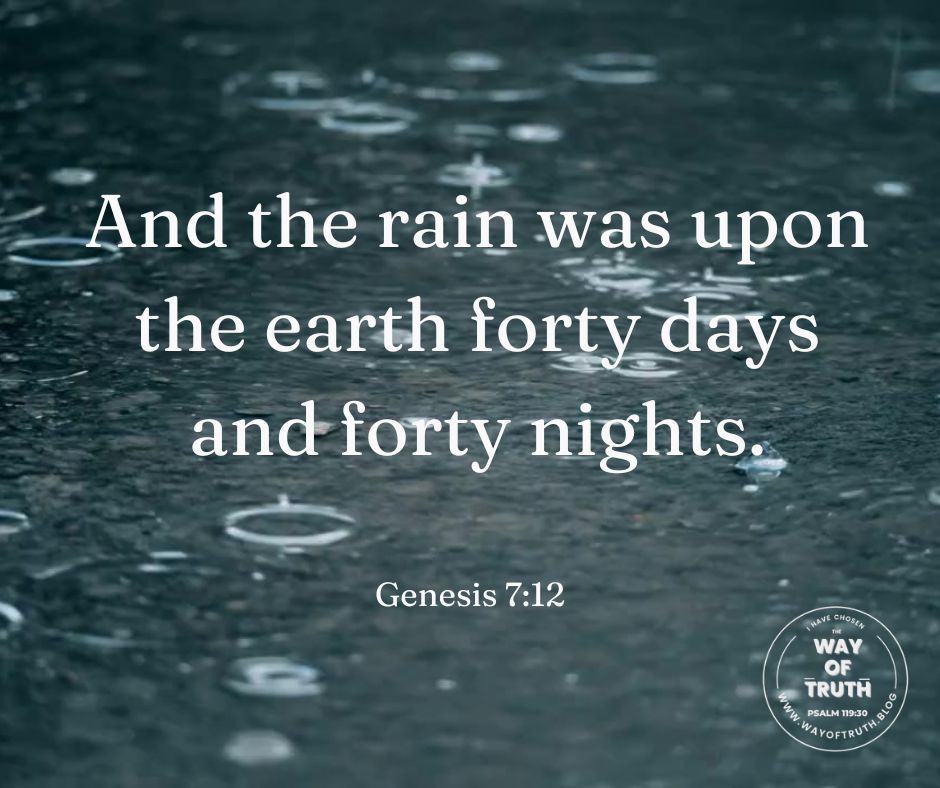
Genesis often speaks with a kind of holy restraint, and Genesis 7:12 is a perfect example. There is no thunderous announcement, no descriptive flourish, just a simple statement of fact. The rain falls. It falls steadily. And it falls for a long time. What God said would happen now happens, exactly as He said it would. The verse reads almost quietly, yet it marks one of the most decisive turning points in human history.
This is one of those moments in Scripture where the absence of drama is itself the message. God does not need to raise His voice to assert His authority. He does not need to explain Himself again. The forty days and forty nights tell us that this is not a sudden outburst or an emotional reaction. Judgment unfolds with patience and purpose. Each day the rain continues, the truthfulness of God’s word is confirmed again and again.
From a devotional standpoint, this verse presses us to think about how we treat God’s warnings. Before the rain ever fell, God had spoken clearly. Noah had preached faithfully. The ark stood as a visible testimony. When the rain finally began, it didn’t introduce new information; it simply confirmed what had already been revealed. That pattern still holds. God’s word confronts us long before circumstances force the issue. The danger isn’t ignorance but delay. By the time the rain becomes unmistakable, the window for response may already be closed.
There is also a quiet apologetic strength here. Many modern critiques assume that divine judgment must be irrational or excessive, yet Genesis presents something very different. The rain doesn’t destroy the world in a moment. It comes steadily, relentlessly, according to God’s declared plan. This is moral judgment, not chaos. From a polemical perspective, Genesis 7:12 challenges worldviews that deny accountability altogether. If there’s no judgment, then warnings are meaningless and justice is an illusion. Scripture refuses that conclusion. The rain testifies that God governs history, not chance.
At the same time, the verse speaks comfort to those inside the ark. For Noah and his family, every day of rain was a reminder that obedience was not wasted. Faith did not spare them discomfort, but it did secure their safety. They still heard the storm. They still waited. But they waited under God’s protection. In much the same way, believers today are not promised an easy path, but a secure one. Trusting God doesn’t remove us from trials; it places us safely within His purposes while those trials run their course.
If you don’t already know Jesus Christ as your Lord and Savior, Genesis 7:12 gently but firmly points you toward Him. Just as God provided an ark before the rain began, He has provided salvation before final judgment arrives. Scripture teaches that judgment is real, but it also teaches that refuge is available. Christ bore judgment at the cross so that those who trust Him would not face it alone or unprotected. The rain in Genesis reminds us that God’s word will be fulfilled. The gospel assures us that God’s mercy has already gone ahead of us. The question is not whether God will keep His word, but whether we will take Him at it while there’s still time.
If you found this devotional helpful, you’re invited to explore the full Bible study on Genesis 7:12, where the verse is examined in greater depth with careful exegesis, theological reflection, and apologetic clarity. You can read it here: Forty Days and Nights of Rain: A Study of Genesis 7:12.