
- I. The Patristic and Orthodox View: Corruption, Not Total Depravity
- II. The Roman Catholic View: The Loss of Original Righteousness and the Need for Grace
- III. The Reformed (Calvinist) View: Total Depravity and Substitutionary Grace
- IV. The Arminian View: Corruption Confronted by Prevenient Grace
- V. The Dispensation of Conscience
- VI. Shared Truth and Subtle Differences
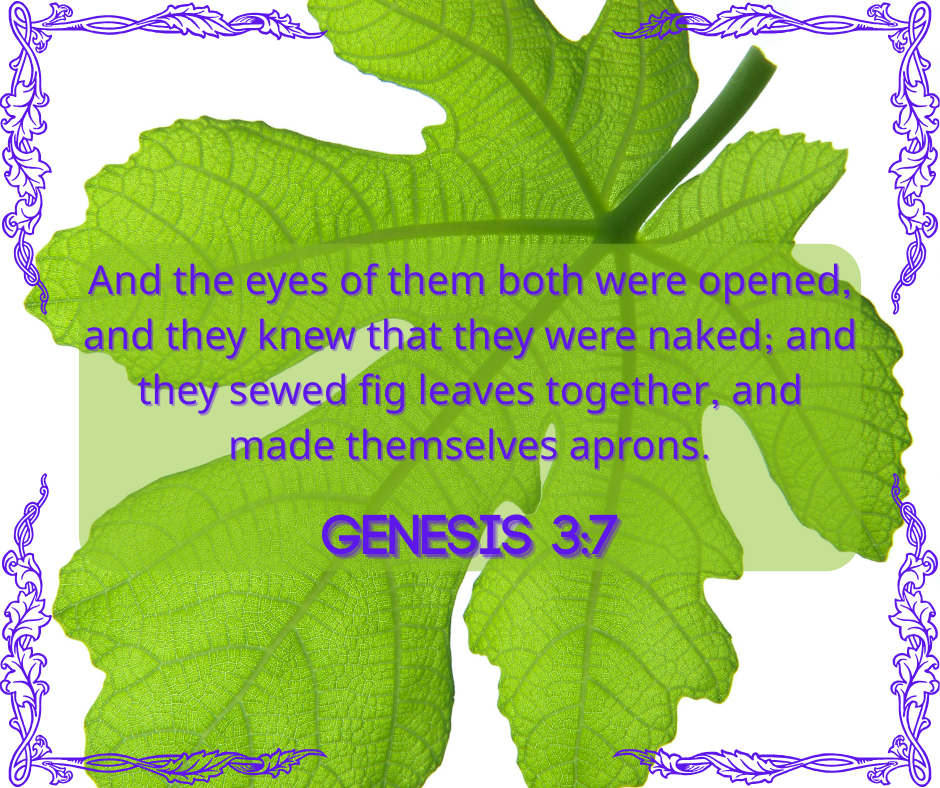
Every branch of historic Christianity recognizes Genesis 3:7 as a decisive moment in the biblical narrative, the turning point where innocence collapses under the weight of sin and the need for grace first emerges. The verse is both diagnosis and prophecy: it reveals what sin does to the human soul and foreshadows what grace must one day accomplish. Yet, across the centuries, Christians have wrestled with its meaning. What was truly lost when Adam and Eve’s eyes were opened? What kind of “knowledge” did they gain? And what does their attempt to sew fig leaves together say about the human condition and God’s saving purpose? While the core truth remains shared—that humanity fell and must be redeemed—the theological nuances across the traditions illuminate the Church’s long effort to understand humanity’s first awakening to sin and its first encounter with grace.
I. The Patristic and Orthodox View: Corruption, Not Total Depravity
Within Eastern Orthodoxy, Genesis 3:7 is interpreted not as the annihilation of human nature but as its corruption and disintegration. Humanity, in this view, did not inherit Adam’s guilt in a legal sense, but rather his mortality and inclination toward sin. The “opening of the eyes” represents a tragic distortion of perception: man’s vision, once fixed on God, now turns inward upon itself. Sin introduces self-awareness unmoored from divine awareness, a tragic awakening to egocentric existence.1 Irenaeus described the fall as humanity’s premature grasp at maturity, seizing the fruit of wisdom before the appointed time.2 Had Adam and Eve continued in faithful communion, true knowledge would have come through fellowship with the Creator; instead, knowledge became an instrument of pride.
In the Orthodox perspective, the fig leaves symbolize humanity’s first act of autonomy: a refusal to entrust oneself to divine mercy. The covering marks man’s attempt to manage sin without repentance, to treat the symptom without addressing the cause. Salvation, therefore, must be the restoration of sight, a return to divine orientation.3 This interpretation rightly highlights that human nature remains redeemable, not destroyed; yet it sometimes softens the immediacy and gravity of the fall. Genesis 3:7 does not portray a gentle corruption of character but the onset of spiritual death. The verse’s haunting brevity—eyes opened, shame realized, coverings sewn—describes an instantaneous fracture that only divine grace can repair.
II. The Roman Catholic View: The Loss of Original Righteousness and the Need for Grace
Roman Catholic theology reads Genesis 3:7 through the lens of humanity’s loss of original righteousness, the supernatural gift that ordered human passions under reason and reason under God. In this reading, the “opening of the eyes” signifies disintegration from within: intellect, will, and desire fall into conflict. The awareness of nakedness reflects not merely physical exposure but spiritual disorder; concupiscence, or the inclination toward sin, becomes the inherited wound of human nature. The attempt to sew fig leaves thus embodies the futility of natural virtue apart from grace—a moral reflex that recognizes loss but cannot repair it.4
Catholic tradition sees in this verse the foundation for the doctrine of sanctifying grace. Just as Adam and Eve lost their original state of harmony with God, so every descendant must be restored through divine grace mediated through the Church’s sacraments. The fig leaves stand as a perpetual reminder that humanity cannot save itself.5,6 Although Catholic theology places undue emphasis on institutional mediation, it does affirm the essential truth the text conveys: guilt drives man to hide, and only God’s initiative can bring reconciliation. The fall created a wound deeper than human morality can heal; divine grace alone can reorient the soul toward God.
III. The Reformed (Calvinist) View: Total Depravity and Substitutionary Grace
The Reformed and Calvinist tradition reads Genesis 3:7 as the first visible evidence of total depravity. Here, total does not mean that man became utterly evil, but that every part of human nature—mind, will, emotion, and desire—was affected by sin’s corruption. The “opening of the eyes” reveals not enlightenment but a corrupted moral consciousness. Humanity now perceives good and evil but cannot love the good or resist the evil.7 Nakedness, once the symbol of innocence, becomes the sign of estrangement. The fig leaves, then, are more than garments; they are symbols of the first “works-based religion.” Adam and Eve attempt to cover their guilt through human ingenuity, a pattern that repeats in every man-made system of self-righteousness.
For the Reformers, Genesis 3:7 is not only the record of humanity’s fall but the earliest shadow of the Gospel. The covering God later provides (Genesis 3:21) prefigures the righteousness of Christ imputed to believers. Humanity’s coverings decay; God’s covering endures. This interpretive line preserves the plain sense of the text: sin brings death and separation, and salvation must come from outside ourselves.
IV. The Arminian View: Corruption Confronted by Prevenient Grace
Arminian theology, while agreeing that humanity fell into corruption through Adam, interprets Genesis 3:7 through the lens of responsible freedom. The verse testifies to the damage sin inflicted upon human nature—eyes opened to guilt, hearts darkened by fear—but not to the destruction of the will. Adam and Eve’s attempt to cover themselves illustrates how sin warps moral perception, yet their awareness of nakedness reveals that conscience remains alive. For the Arminian, this tension captures the essence of prevenient grace: though the fall left humanity powerless to save itself, God’s grace still awakens the heart, enabling repentance and faith.8
In this view, Genesis 3:7 demonstrates both the depth of sin and the persistence of divine pursuit. The instinct to cover one’s shame, though misguided, becomes the arena where grace begins to work. While Reformed theology emphasizes humanity’s total inability apart from regenerating grace, Arminianism underscores that God graciously restores enough light for fallen people to respond to Him. Both agree that human effort cannot atone for sin; the difference lies in how grace reaches the sinner. Genesis 3:7 can thus be seen as the moment when divine grace begins its silent pursuit: when God lets humanity feel its nakedness so that it might seek His covering.
V. The Dispensation of Conscience
Some theologians identify Genesis 3:7 as the beginning of the “dispensation of conscience,” the second of seven eras in God’s redemptive plan. According to this view, when Adam and Eve’s eyes were opened, they became morally aware and thus accountable to their awakened conscience. Before this moment, they lived in the “dispensation of innocence”; afterward, moral responsibility governed humanity’s relationship with God until the flood (Genesis 6).9
This interpretation captures an important truth: the fall did awaken conscience. Humanity indeed became aware of good and evil. However, to make conscience a separate dispensation risks reading too rigid a structure into the text. Genesis 3:7 reveals that conscience alone, unaided by grace, condemns rather than saves. The conscience testifies to God’s law written on the heart (Romans 2:15), but it cannot reconcile man to God. Scripture consistently portrays the conscience as a witness to guilt, not a solution to it. Thus, while the “dispensation of conscience” highlights a real development in moral awareness, the biblical emphasis remains that salvation never depends on conscience but on divine mercy. Genesis 3:7, therefore, marks the birth of moral awareness, not an independent era of moral sufficiency.
VI. Shared Truth and Subtle Differences
Despite their differences, all orthodox Christian traditions converge on a central confession: Genesis 3:7 exposes the human condition in its starkest form: guilt realized, shame awakened, and the need for covering made unmistakable. The Orthodox highlight the distortion of the divine image; Catholicism emphasizes the loss of sanctifying grace; the Reformed stress total corruption and the necessity of substitutionary atonement; Arminians underscore prevenient grace and restored moral awareness. These perspectives, taken together, form a fuller picture of the same reality: sin has marred the image of God but not erased it. Humanity is broken, but not beyond restoration.
Where interpretations diverge from the plain sense of Scripture is in the depth of the fall and the immediacy of its spiritual consequence. The Bible presents not a slow erosion of goodness but a decisive rupture: the death of innocence and the birth of guilt. To reduce Genesis 3:7 to a mere story of moral awakening or gradual imperfection is to miss its force. The verse confronts us with the gravity of sin and the futility of self-redemption. Yet it also gestures toward the hope that will soon break through the curse. What began with fig leaves ends with a cross; what started in shame concludes in glory. The coverings of human effort will always crumble, but the righteousness of Christ, once given, never fades.
In the end, Genesis 3:7 is not merely the record of humanity’s fall. It is the first note in the symphony of grace. All Christian traditions, whatever their nuances, agree on this essential truth: the eyes that were opened in rebellion can only be healed by divine mercy. The same God who allowed our eyes to see our sin is the One who offers to cover it forever in His righteousness.
- Craig Truglia, “The Orthodox Doctrine of Original Sin: A Comprehensive Treatment,” Orthodox Christian Theology, April 11, 2021, https://orthodoxchristiantheology.com/2021/04/11/the-orthodox-doctrine-of-original-sin-a-comprehensive-treatment/. ↩︎
- St. Irenaeus of Lyons, Against Heresies (Roberts-Donaldson translation), Book III, Chapter 22, §4, online at https://www.clerus.org/bibliaclerusonline/en/b0k.htm (accessed October 30, 2025). ↩︎
- St. George Greek Orthodox Cathedral, “What Is the Consequence of the Sin of Adam and Eve?,” Catechism of the Orthodox Faith, Greenville, SC, https://www.stgeorgegreenville.org/our-faith/catechism/the-ofall/consequence-sin (accessed October 30, 2025). ↩︎
- Catechism of the Catholic Church, para. 399, 405 “Paragraph 7. The Fall,” The Holy See, https://www.vatican.va/content/catechism/en/part_one/section_two/chapter_one/article_1/paragraph_7_the_fall.html (accessed October 30 2025). ↩︎
- Catholic Answers, “What the Early Church Believed: Original Sin,” Catholic Answers (tract), https://www.catholic.com/tract/what-the-early-church-believed-original-sin (accessed October 30, 2025). ↩︎
- Catholic Encyclopedia, “Sanctifying Grace,” Catholic Encyclopedia, New Advent, https://www.newadvent.org/cathen/06701a.htm (accessed October 30, 2025). ↩︎
- Institutes of the Christian Religion, by John Calvin, Book 2, Chapter 1, “Through the fall and revolt of Adam, the whole human race made accursed and degenerate,” available online via the Christian Classics Ethereal Library, https://www.ccel.org/ccel/calvin/institutes.iv.ii.html (accessed October 30, 2025). ↩︎
- Tom Hicks, “Classical Arminianism: Imputed Sin and Total Inability,” https://www.founders.org/articles/classical-arminianism-imputed-sin-and-total-inability/ (accessed October 30, 2025). ↩︎
- The Prophecy Study Bible. (1998). Grand Rapids: Zondervan Publishing House,4-5, 7. ↩︎