
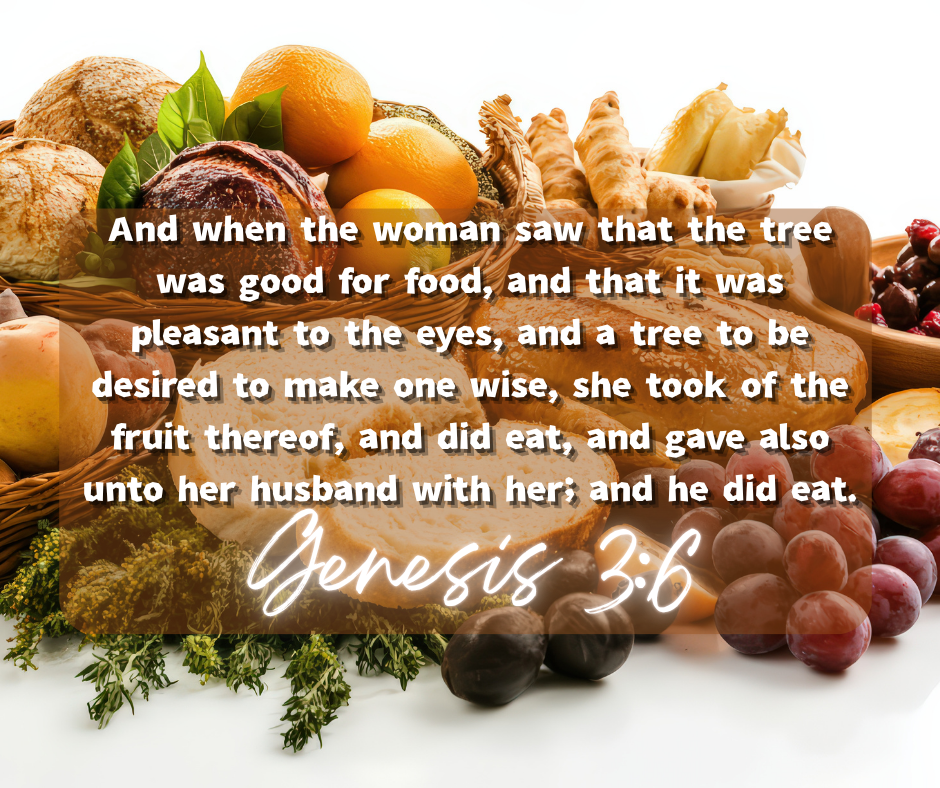
Genesis 3:6 is not only the record of humanity’s collapse. It is the reflection of every heart. It reveals not merely what Adam and Eve did but what all their descendants still do. The verse unfolds a pattern that endures across time: seeing, desiring, taking, and sharing. Each step describes how sin begins and spreads. Yet hidden within this tragic sequence is the shape of redemption itself. The same God who judged the first meal of disobedience has prepared another meal of grace. What began with eyes fixed on forbidden fruit ends with eyes lifted to a crucified Savior. What began in taking ends in receiving.
The Pattern of Sin in Every Soul
The tragedy of Genesis 3:6 is not confined to Eden. It continues in the quiet choices of every soul. We see what is forbidden and call it beautiful; we persuade ourselves that what tempts us is harmless, even necessary. Sin rarely appears monstrous at first. It seems reasonable, enlightened, and desirable. That is why transgression so often disguises itself as wisdom. Eve’s logic was consistent, but her confidence had shifted: she trusted her judgment above God’s Word.
Temptation still works by the same distortion. It begins not in open rebellion but in subtle reinterpretation: Did God really mean that? The path to victory, therefore, is not stronger willpower but deeper faith. Obedience grows from trust, not from fear. The psalmist’s prayer remains the believer’s defense: “Thy word have I hid in mine heart, that I might not sin against thee” (Psalm 119:11).
To reverse the fall’s pattern, the Church and every believer must cultivate what Eve neglected: a settled confidence in the goodness of God’s Word. Sin begins with suspicion; holiness begins with trust.
The Wisdom That Comes from Trust, Not Autonomy
Eve sought wisdom on her own terms and found only shame. The same illusion persists in modern language—“self-discovery,” “authenticity,” “empowerment”—phrases that sanctify the serpent’s logic in the vocabulary of progress. Yet Scripture defines wisdom not as independence but as submission. “The fear of the Lord is the beginning of wisdom” (Proverbs 9:10).
True wisdom is not measured by intellect but by posture. James 3:17 describes it as “pure, peaceable, gentle, and easy to be entreated.” It does not elevate the self; it bows before truth. Eve’s mistake was not curiosity; it was autonomy. She desired the right thing (wisdom) by the wrong means (disobedience). So too, spiritual maturity is not the accumulation of insight but the reorientation of the heart toward dependence. The mind may analyze, but only the humble heart understands.
To undo the folly of Genesis 3:6, one must look upward, not inward. Wisdom begins where self-sufficiency ends: at the foot of the cross, where human pride finally yields to divine truth.
The Gift That Reverses the Taking
Eve took and ate; Christ gave and said, “Take, eat.” The gospel deliberately echoes Eden’s verbs but reverses the result. The first meal brought death; the second meal proclaims life. Every celebration of the Lord’s Table is an act of theological remembrance, a declaration that the taking which condemned humanity has been answered by a giving that redeems it.
At the cross, the guilt of Genesis 3:6 is undone. Humanity reached for what was forbidden; Christ extends what is freely given. Eve grasped at divinity; the Son of God humbled Himself to take our humanity. The fruit that was “pleasant to the eyes” has been replaced by a cross that offends the eyes but heals the soul. “This is my body, which is given for you” (Luke 22:19): these words mark the turning point of history. The curse began with a meal and is reversed by a feast.
The Restoration of Relationships
Sin fractured every bond it touched. Eve gave to Adam what she should not have, and Adam received what he should have refused. From that moment, human fellowship was poisoned by blame, shame, and control. Yet the gospel restores what the fruit destroyed. Christ reconciles humanity to God and, in doing so, reconciles human beings to one another.
In the redeemed community, male and female no longer stand as rivals but as partners in grace. Unity no longer erases distinction but redeems it. In marriage, in friendship, and in the Church, grace restores mutual trust and holy companionship. Where sin once made partnership a stage for pride, redemption transforms it into a theater of service. The Church thus becomes a living parable of repaired relationships, the body where love triumphs over blame and humility heals division.
The Hope That Overcomes Desire
Genesis 3:6 closes with ungoverned appetite; redemption begins by transforming desire itself. Grace does not suppress longing. It sanctifies it. God calls His people not to cease desiring, but to desire rightly. “Blessed are they which do hunger and thirst after righteousness: for they shall be filled” (Matthew 5:6).
Eve’s misdirected longing finds its correction in the believer’s cry: “Whom have I in heaven but thee?” (Psalm 73:25). The gospel changes not only what we seek but how we see. Obedience ceases to feel restrictive and begins to feel freeing. The pleasures of holiness replace the illusions of sin. When the heart delights in the Lord, the fruit that once seemed sweet now tastes bitter, and the obedience once feared becomes joy.
Sanctification, then, is not the end of desire but its healing. The believer’s appetite is trained by grace to hunger for what endures.
The Invitation of the Second Adam
Genesis 3:6 ends with a quiet tragedy: “and he did eat.” The New Testament opens with a gentle invitation: “Come and dine” (John 21:12). The symmetry is divine irony. Adam’s meal brought death to the world; Christ’s meal brings life to the dead. The first garden witnessed a fall; the resurrection revealed the risen Lord.
The gospel is the story of a second Adam who entered the thorns of the first and bore its curse. Where the woman saw and desired, the Son saw and submitted. Where Adam shared corruption, Christ now shares righteousness. The hand that once reached to take has been met by hands pierced to give. And to all who believe, He extends the invitation Adam could never offer: “Take, eat… drink ye all of it.”
Every act of faith is a return to that table: a choice to receive rather than to grasp, to trust rather than to question. The fruit of death has been replaced by the Bread of Life, broken and shared for the healing of the nations.
Closing Reflection
Genesis 3:6 is not ancient myth but perpetual mirror. Each of us has stood before our own tree, judging by sight instead of faith and reaching for what was not ours. Yet the same God who watched humanity’s first act of rebellion has stooped in mercy to redeem it. The hand that grasped in pride has been met by the hand that was pierced in love.
This is the gospel in miniature: our fall through desire and His salvation through surrender. What began with a fruit ends with a cross and will end again with a tree, “whose leaves are for the healing of the nations” (Revelation 22:2). The story that began in a garden of sin will close in a garden of glory. Between those two trees stands the Savior who turned taking into receiving, death into life, and exile into homecoming.