
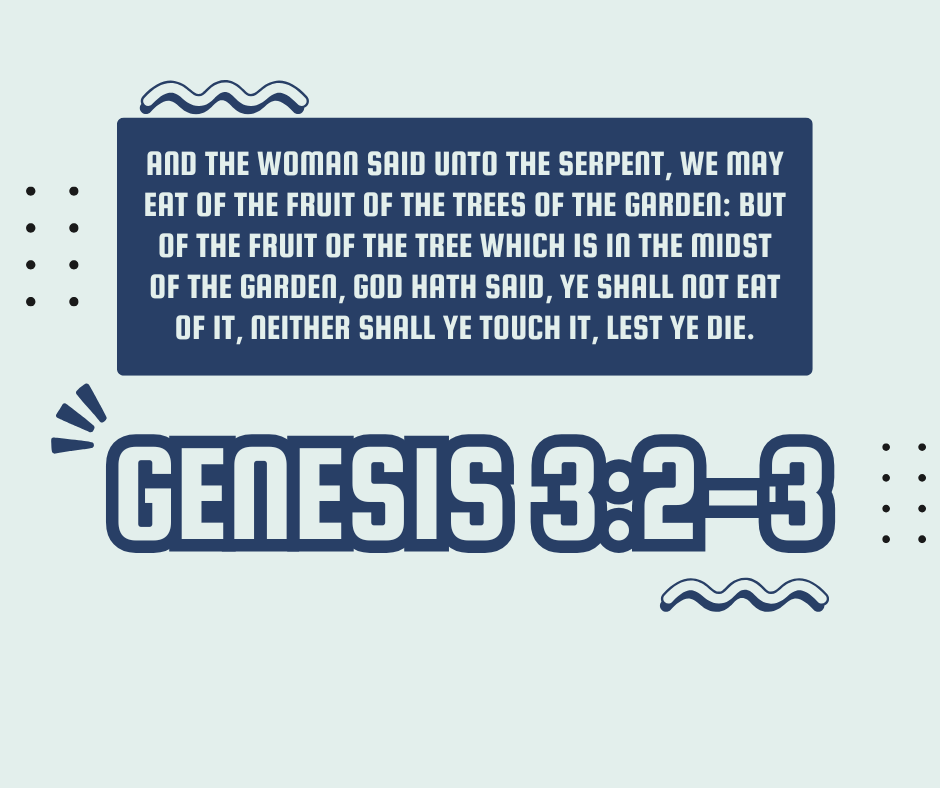
Having traced how others have misread or reframed this passage—from Gnostic inversion to modern revision—it is good to come home again, to the life of God’s people. Genesis 3:2–3 is not merely a relic of early temptation; it is a mirror held up to the church. Every age faces the same test Eve did: Will we handle God’s Word with precision, gratitude, and faith or will we reshape it to suit our fears, preferences, or culture? The health of the church in every generation depends on this. Eve’s error was not that she rejected God’s Word outright, but that she repeated it almost correctly. Her omission of generosity, her addition of caution, her softening of warning: each tiny adjustment became a foothold for the serpent. And so it remains today. The church’s calling is to be the community that preserves the Word as given: unedited, unembellished, and unashamed.
Preaching and Teaching: Exactness with Life in It
The first arena where Eve’s lesson must be heeded is in preaching and teaching. The pulpit and classroom are where God’s Word is either honored or mishandled, where truth can either be transmitted with faithfulness or subtly eroded. Eve’s restatement warns us that the smallest imprecision in repeating God’s Word can have the gravest consequences. Preachers and teachers who handle Scripture carelessly—watering down its warnings, adding burdens God never imposed, or obscuring its generosity—echo her mistake. Yet when pastors proclaim the Word with clarity and warmth, when they let the text speak on its own terms without apology or embellishment, they redeem Eve’s failure in miniature.
The challenge is balance. The church must guard against legalism, which adds to God’s commands and suffocates grace, and against liberalism, which subtracts from them and drains away holiness. Paul’s charge to Timothy captures it perfectly: “Hold fast the form of sound words” (2 Timothy 1:13). The preacher’s task is not innovation but preservation: to speak with reverence what God has already spoken. Theological precision must always be joined with spiritual vitality, for truth without love becomes harsh, and zeal without accuracy becomes blind. Eve’s failure shows what happens when either side of that balance is lost.
Worship: Word at the Center
The second arena is worship. Eve’s edited retelling reminds us that imagination and emotion, though valuable, are insufficient to sustain the life of faith. True worship is not born from human creativity but from divine revelation. When the church’s worship drifts from Scripture—when songs, prayers, and sermons become shaped more by fashion or feeling than by the Word—then the same subtle drift that began in Eden repeats itself.
Biblically grounded worship, by contrast, anchors the community in truth. In Israel’s life, God’s Word was to be recited daily, written on doorposts, taught to children, and woven into song (Deuteronomy 6:4–9; Psalm 119). The church inherits that pattern. Scripture read, sung, prayed, and preached keeps the community centered, correcting the quiet tendency to add or omit. Word-centered worship is not a preference; it’s a spiritual necessity. When the Word shapes the rhythm of worship, it guards the heart from the serpent’s whisper and renews the mind in the voice of God.
Discipline and Boundaries: Neither Adding nor Erasing
Eve’s phrase “neither shall ye touch it” stands as an enduring parable of how good intentions can go astray. Her impulse was protective, but her addition blurred the line between divine command and human rule. The church faces the same tension in its practice of discipline. It must maintain clear moral boundaries yet resist the temptation to bind consciences with regulations that God has not required. Church history is full of examples—whether Pharisaic rigor or medieval excess—where manmade fences were mistaken for God’s law, turning guidance into bondage.
Yet the opposite danger is just as real. In the name of compassion or cultural accommodation, churches sometimes soften or silence God’s commands, removing the very boundaries that preserve spiritual life. Genesis 3:2–3 warns against both extremes. True ecclesial discipline reflects the Word with fidelity, neither adding to its weight nor erasing its edge. A church that disciplines according to Scripture alone models the holiness of God without usurping His authority. As Eve’s example shows, distortion can arise from fear as easily as from rebellion. Faithful discipline calls for both humility and courage: humility to submit to God’s rule, and courage to uphold it.
Unity and Mission: A People of the Word
Finally, this passage speaks to the unity and mission of the church. Eve’s altered words broke trust between humanity and God, and the serpent used that breach to divide. The same dynamic operates whenever the church neglects or distorts Scripture: unity fractures, confidence wavers, and mission loses power. The body of Christ is meant to be “the pillar and ground of the truth” (1 Timothy 3:15), not a community that speculates about it.
When the Word is faithfully confessed and consistently lived out, it becomes the bond of true fellowship. It unites believers not through uniformity of culture or tradition but through shared allegiance to divine revelation. From that unity flows mission. A church that clings to the Word without compromise offers a steady witness in a world adrift in half-truths. It becomes what Eve was meant to be: a steward of God’s speech, echoing His voice rather than revising it.
The Church’s Answer to the Serpent’s Question
Genesis 3:2–3 is more than an ancient warning; it is a blueprint for ecclesial faithfulness. The serpent’s question—“Yea, hath God said?”—still echoes in every generation. Each time the church gathers, preaches, worships, disciplines, or sends forth its members, that question is posed anew. The answer must not stumble into Eve’s mistakes. The church must be the community that speaks God’s Word with reverence, clarity, and love, adding nothing, subtracting nothing, trusting everything. In that fidelity lies her life, her unity, and her mission to a world that desperately needs to hear the unaltered voice of God.