
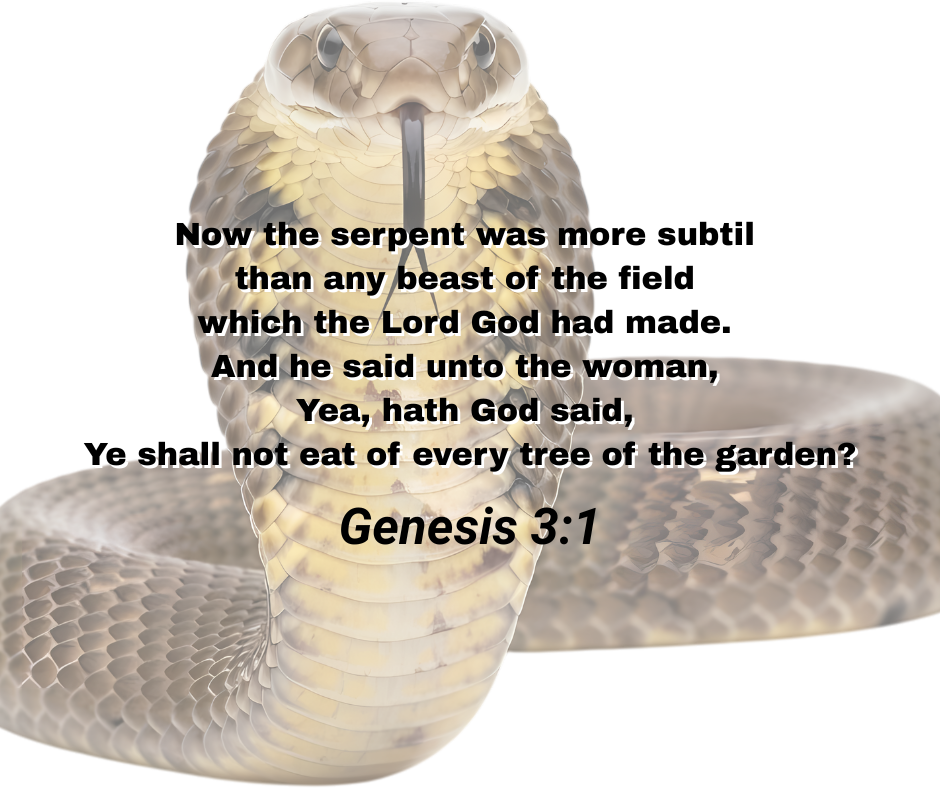
While mainstream LDS theology affirms the serpent as a manifestation of Satan and views the Fall as tragic, it also teaches that mortality, opposition, and the Fall were necessary conditions for human growth. In this framework, elements that orthodox Christianity sees only as evil—such as deception and the temptation by the serpent—are sometimes described in LDS sources as part of what allows agency to exist, and what makes meaningful choice possible.1
Some LDS scholars and devotional writers go further in reflecting on this paradox: that Satan’s act, while morally wrong, was foreseen by God and allowed to greater purposes, such as the coming of Christ, the possibility of repentance, and ultimately spiritual growth for humanity. In the LDS Student Manual “Genesis 3: The Fall,” for example, one reads that to “defeat the power which death had gained it became necessary that an infinite atonement be offered to pay the debt … and restore Adam and Eve … to immortal life through the resurrection.”2 This places the Fall and by extension the serpent’s role within a divine economy not a chaotic intrusion, but something God permits and transforms for good.
The phrase “Paradoxes in Paradise,” used in some BYU-studies, captures how some LDS commentators reflect on Genesis 3:1 with tension: on one hand, it is Eden’s irreparable rupture; on the other, it is also the moment when the conditions were set in motion for God’s plan of redemption to unfold.3 Even in Latter-day Saint discourse that remains fully within orthodoxy, there is an emphasis on how suffering, error, and opposition—including the serpent’s deception—become opportunities for faith, choice, and reliance on divine grace.
From a biblical standpoint, the Latter-day Saint emphasis on God’s sovereignty in the Fall is commendable. Scripture itself affirms that what was meant for evil can be overruled by God for good (Genesis 50:20; Romans 8:28). In that sense, LDS reflection rightly acknowledges that the serpent’s deception did not frustrate God’s purposes but became the occasion for redemption through Christ. Biblical Christianity, too, celebrates the paradox that out of humanity’s darkest moment came the promise of the Savior (Genesis 3:15).
Yet the strength of this paradox quickly becomes a pitfall when the serpent’s role is described as somehow necessary or beneficial in God’s plan. The Bible never portrays Satan as a partner in redemption but as the “murderer from the beginning” and “father of lies” (John 8:44). To cast his deception as a positive element risks blurring the crucial distinction between God’s sovereign use of evil and His authorship of good. While God overrules sin, He never needs it to accomplish His will.
Moreover, framing the serpent’s deception as paradoxically beneficial can unintentionally echo Gnostic patterns, where transgression becomes enlightenment and the tempter is subtly rehabilitated. By contrast, the biblical tradition maintains both sides of the paradox without compromise: the Fall was wholly evil, rooted in humanity’s rebellion and the serpent’s deceit, yet God in His grace brought forth salvation through the Seed of the woman. In this way, Christian doctrine safeguards the goodness of God, the seriousness of sin, and the glory of redemption without assigning positive value to the serpent’s lie.
- Old Testament Student Manual: Genesis–2 Samuel. Salt Lake City: The Church of Jesus Christ of Latter-day Saints, 2003. “Genesis 3: The Fall.” Accessed September 21, 2025. https://www.churchofjesuschrist.org/study/manual/old-testament-student-manual-genesis-2-samuel/genesis-3-the-fall?lang=eng. ↩︎
- Ibid. ↩︎
- Julie M. Smith, Paradoxes in Paradise, Brigham Young University, Accessed September 21, 2025 https://scholarsarchive.byu.edu/mi/37. ↩︎