
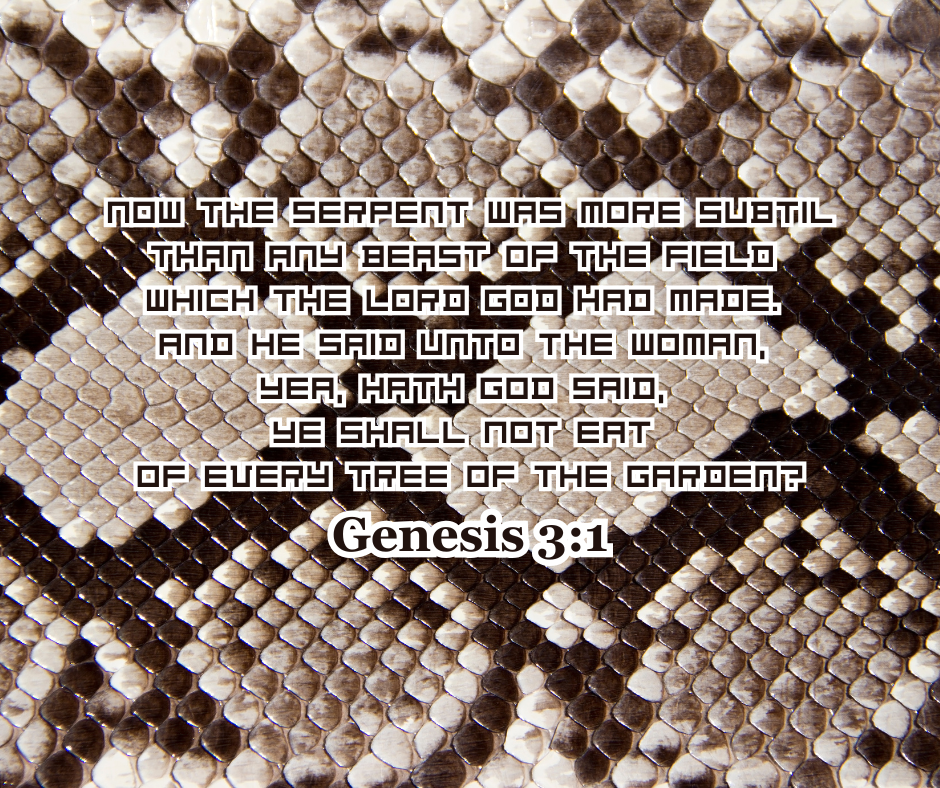
Flowing from the ways some early sects openly venerated the serpent, modern occult and Satanist movements push that inversion further. They don’t just recharacterize the serpent; they cast him as a benefactor, even a liberator. Genesis 3:1 becomes, in these circles, not a warning against deception but proof that the serpent frees humanity from “arbitrary” divine limits, restrictions supposedly placed by a jealous God.
Figures like Aleister Crowley and Anton LaVey are among those whose writings have been interpreted in this way, though the evidence is often more symbolic than systematic. Crowley, in Liber AL vel Legis (“The Book of the Law”), weaves themes of rebellion, knowledge, and sovereignty that echo the serpent’s question (“Hath God said?”) in Eden. For example, in the hymns and poetry linked to Lucifer and the serpent-like imagery, there is sometimes an emphasis on illumination, self-empowerment, and stepping beyond conventional moral constraints.1
Beyond Crowley, the New Age and occult milieu borrows heavily from esoteric reinterpretations of Genesis. A notable example is found in The Secret Doctrine by Helena Blavatsky, where she asserts that the Serpent of Genesis can be viewed as “the real creator and benefactor, the Father of Spiritual mankind” in certain symbolic frameworks.2 These readings often treat the serpent’s subtleness not as deception but as superior wisdom, as one who awakens humanity to higher truths, rather than one who entices to rebellion.
While these views are appealing to some—because they promise freedom, autonomy, and knowledge—they rest on a radical inversion of Scripture’s own message. Instead of portraying obedience and trust in God as life-giving, these traditions present disobedience as liberating. Instead of a covenant-relationship with a good God, they paint God as oppressive.
Scripture strongly rejects this inversion. The serpent’s question is not a pathway to knowledge and freedom; it is the gateway to sin, fear, and death (Genesis 3:1-7). And as the biblical storyline unfolds, Christ emerges as the true giver of life, not by rejecting God’s word, but by fulfilling it (John 8:47-58; Hebrews 4:12). The idea that Satan or the serpent is beneficent runs counter to the testimony of both the Old and New Testaments.
- Johan Nilsson, “Aleister Crowley, “Hymn to Lucifer” (Undated) and The Book of Thoth (1944),” in Satanism: A Reader (New York: Oxford University Press, 2023), 153-173. ↩︎
- Steven Bancarz, “Proof the New Age Is Satanic,” Reasons for Jesus, May 13, 2016, https://reasonsforjesus.com/proof-the-new-age-is-satanic/. ↩︎