
In official Latter-day Saint teaching, a man and woman who are “sealed” in a temple marriage may continue that marital bond eternally and, through exaltation, “be gods” in the world to come. Doctrine and Covenants 132 explicitly links eternal marriage with becoming “gods” who possess “a fulness and a continuation of the seeds forever and ever.”1 The Church’s Gospel Topics essay, “Becoming Like God,” frames exaltation as the telos of covenant life, with eternal family relationships at its center.2 The 1995 “Family Proclamation” similarly situates marriage and family within an eternal scheme.3
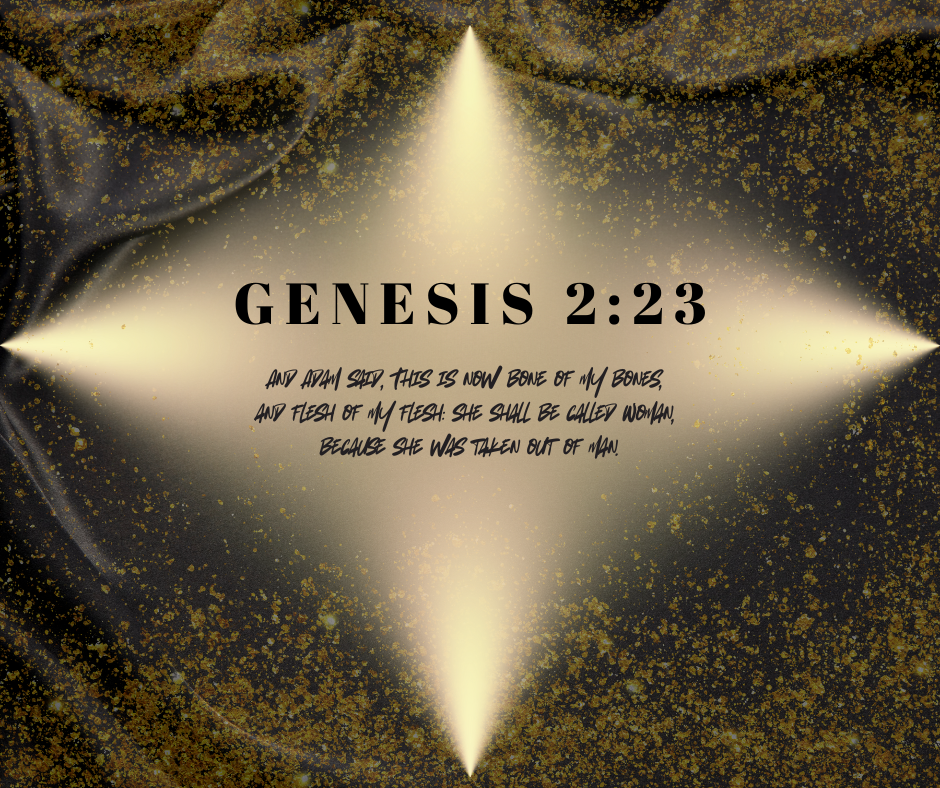
LDS interpreters point to the creational union of man and woman as a template that persists beyond death: if the first marriage is divinely instituted in creation, then—so the argument goes—its ideal form is realized in eternity. On that reading, Adam’s recognition (“bone of my bones… flesh of my flesh”) anticipates an everlasting, deifying union continued through temple sealing.
However, Genesis 2:23 establishes a covenantal, bodily union (“one flesh”) that structures the current temporal created order. Several biblical passages resist an eternalization of the marriage bond:
- Eschatological horizon. Our Lord teaches, “For in the resurrection they neither marry, nor are given in marriage, but are as the angels of God in heaven” (Matthew 22:30; cf. Luke 20:34–36). Jesus grounds His correction in the nature of the age to come, not merely in the marital status of a single case. The New Testament consistently reorients ultimate union toward Christ and His Church (Eph 5:31–32), not toward the perpetuation of earthly marriage in glory.
- The identity of God. Biblical monotheism excludes any ontology of exalted creaturely “gods” alongside or after the one true God: “Before me there was no God formed, neither shall there be after me” (Isaiah 43:10, KJV; cf. 44:6–8). Exaltation to deity stands at odds with the Creator–creature distinction that runs from Genesis through Revelation.
- The grammar of the passage. Adam’s statement is recognition, not apotheosis. The causal clause (“because she was taken out of man”) explains correspondence-in-distinction; the naming formula (“she shall be called Woman”) publicly acknowledges created identity. The poetic celebration binds Genesis 2:23 to 2:24 (“one flesh”), anchoring marriage as a creation ordinance ordered to earthly kinship and procreative community, not to postmortem divinization.4
- Covenantal consummation. Scripture locates the fulfillment of marriage typology in Christ (the Bridegroom) and the Church (the Bride), not in the eternal self-extension of human couples (Eph 5:31–32; Rev 19:7–9). The sign gives way to the reality: the covenant that endures forever is the new covenant in Christ’s blood, not the perpetuation of Adamic marriage beyond the resurrection.
Genesis 2:23 beautifully affirms creational unity, bodily correspondence, and covenantal companionship. It does not teach—or imply—post-resurrection marriage or creaturely ascent to godhood. In the biblical storyline, marriage is temporal, typological, and good; God alone is eternal, uncreated, and worthy of worship. Salvation, glorification, and our everlasting fellowship are secured “in Christ” (Rom 8:29–30), not in the eternalization of human marriage.
- The Doctrine and Covenants of the Church of Jesus Christ of Latter-day Saints (Salt Lake City: The Church of Jesus Christ of Latter-day Saints, 2013), 132:19–20, https://www.churchofjesuschrist.org/study/scriptures/dc-testament/dc/132?lang=eng. ↩︎
- “Becoming Like God,” Gospel Topics, The Church of Jesus Christ of Latter‑day Saints, accessed August 16, 2025, https://www.churchofjesuschrist.org/study/manual/gospel-topics-essays/becoming-like-god?lang=eng ↩︎
- “The Family: A Proclamation to the World,” The Church of Jesus Christ of Latter-day Saints, General Relief Society Meeting (October 1995), accessed August 16, 2025, https://www.churchofjesuschrist.org/study/general-conference/1995/10/the-family-a-proclamation-to-the-world?lang=eng. ↩︎
- Gordon J. Wenham, Genesis 1–15, Word Biblical Commentary, vol. 1 (Waco, TX: Word Books, 1987), 70–71. ↩︎