
Many modern worldviews and religious philosophies either lack a clear narrative in which humanity is entrusted with a divinely ordained duty to cultivate and guard creation, or they reduce labor to a burdensome survival task or an endless cycle of existence rather than a purposeful calling rooted in fellowship with a personal Creator.
For example, Eastern religions such as Hinduism and Buddhism often emphasize harmony with nature through non-harm (ahimsa) and detachment from worldly striving (Harvey, 2000). While this fosters respect for life, it does not frame work itself as a sacred partnership with a Creator who commands stewardship and service. Similarly, many indigenous and animistic traditions hold nature as inherently sacred and populated with spirits, yet this reverence is typically expressed through ritual and taboo rather than a coherent moral commission to actively cultivate and guard creation on behalf of a holy God (Tatay & Merino, 2023).
Secular humanism and various forms of modern spirituality may affirm environmental conservation and sustainability, but largely as a rational, ethical, or pragmatic responsibility rather than as an act of worship. Without a transcendent moral Giver, care for the earth becomes a choice of conscience or social consensus, lacking the covenantal weight and enduring purpose that Scripture imparts.
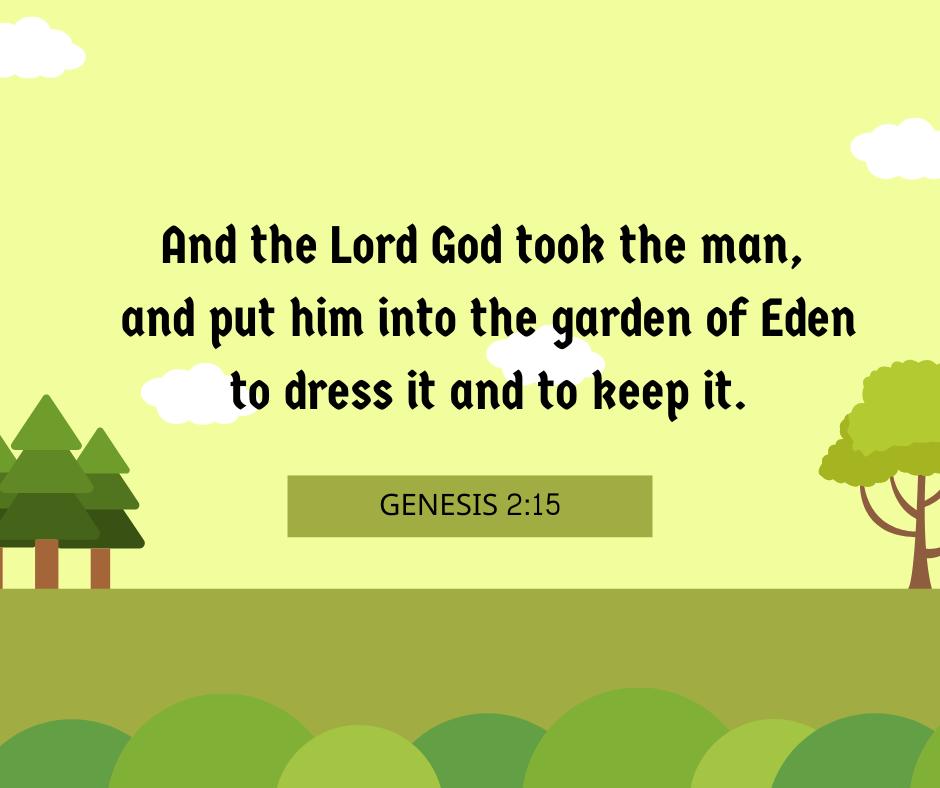
In striking contrast, the biblical account uniquely combines three profound truths: work is good and purposeful, humanity is charged to guard creation as moral stewards, and this commission flows directly from a personal relationship with the sovereign Lord who made heaven and earth. Genesis 2:15 reveals that tending and keeping the garden is not just practical agriculture but a sacred trust, a priestly service within a holy sanctuary where mankind communes with God and reflects His character.
This distinct vision sets biblical stewardship apart from Eastern mysticism, animistic reverence, and secular environmental ethics alike. It anchors humanity’s responsibility for creation in the revealed will of a Creator who is both righteous and relational. Through Christ, the second Adam, this original calling is redeemed and will be perfectly restored when the new heavens and new earth are revealed, and redeemed humanity once again works and worships in unbroken harmony with the Creator (Revelation 22:3–5).