
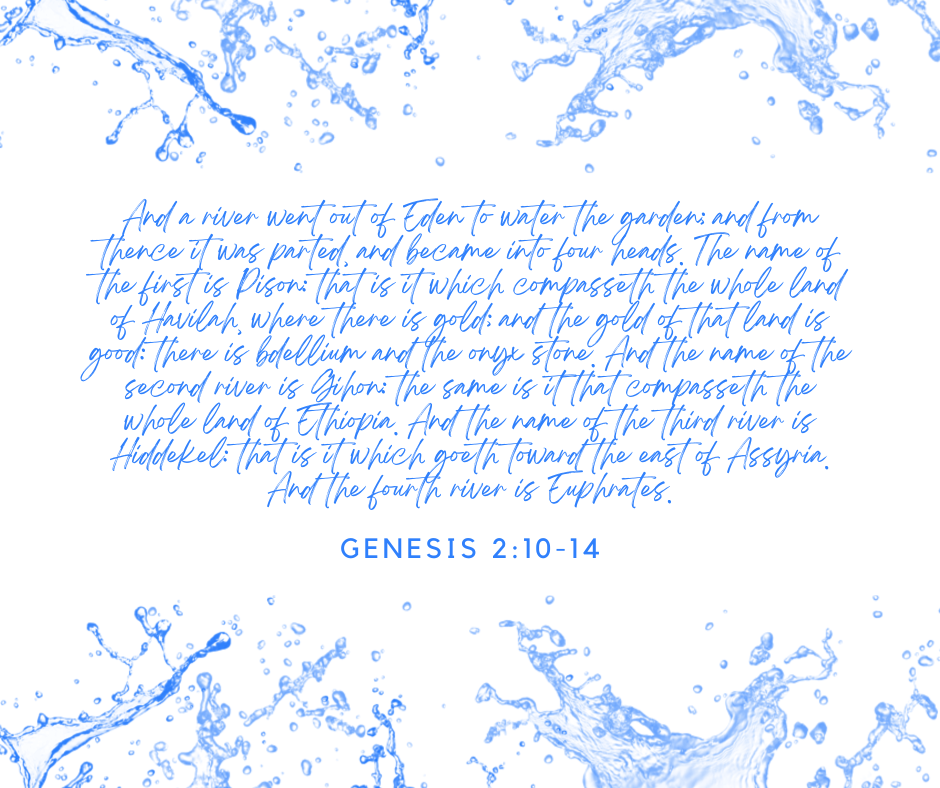
Within ancient Gnostic cosmologies, the four rivers described in Genesis 2:10–14 undergo a radical reinterpretation that distorts their meaning beyond recognition. In Gnostic texts such as The Apocryphon of John, The Hypostasis of the Archons, and other writings from the Nag Hammadi corpus, these rivers are not understood as literal features of a real garden planted by God, nor as symbolic representations of divine virtues or moral truths. Instead, they are transfigured into metaphysical emanations, spiritual channels flowing from the pleroma, the supposed realm of divine fullness from which all spiritual realities emanate.
According to this framework, the four rivers become part of a descending order of spiritual reality. Rather than marking the abundance and order of God’s good creation, they signify the fragmentation of divine essence as it cascades downward into an increasingly corrupt material realm. The rivers, then, are viewed not as blessings, but as stages in the soul’s entrapment, currents along which the divine spark within man has flowed into the prison of physical existence. Some Gnostic schools suggest that each river corresponds to an aeon, archon, or intermediary spiritual power, serving either as gatekeepers or deceivers that obscure the soul’s true origin and hinder its return to the spiritual realm.
In this schema, Eden itself is not a paradise but a façade, an illusion crafted by the Demiurge to keep souls bound within the material world. The rivers, rather than offering life-giving sustenance, become symbols of a counterfeit creation. They either function as deceptive currents meant to lead the soul away from truth or as esoteric paths that, when correctly interpreted through gnosis (secret knowledge), allow for spiritual ascent. Thus, instead of pointing upward to God’s covenantal order, the rivers are reimagined as conduits of metaphysical confusion or mystical escape (Jonas, 2001).
This reinterpretation strips the rivers of their historical and theological grounding. The rivers are no longer witnesses to God’s benevolent provision but become elements of a tragic cosmology in which matter is evil, and salvation is achieved not through faith in God’s redemptive acts but through mystical insight and self-liberation. This shift redefines salvation as escape from creation rather than the restoration of creation, directly contradicting the biblical narrative of redemption through the incarnate Christ who entered history to redeem both soul and body.
The Gnostic handling of Genesis 2:10–14 is a stark example of what occurs when allegory is severed from sound theology. Like the allegorical methods of Philo, the mysticism of the Kabbalists, and the spiritual interiorizations of Swedenborg, the Gnostic reinterpretation of Eden’s rivers transforms them into tools of speculative theology untethered from the plain meaning of the text. But Gnosticism goes further: it uses allegory not to illuminate, but to invert the testimony of Scripture.
The rivers of Eden are not metaphysical illusions or esoteric codes; they are historical realities placed by a sovereign Creator. They testify not to spiritual confusion, but to divine order. When interpreters abandon this plain sense of Scripture in favor of speculative systems, they risk replacing God’s truth with human imagination. Gnostic allegorization of the rivers is not merely misguided, it is a theological reversal that denies the goodness of creation and the necessity of redemptive history.