
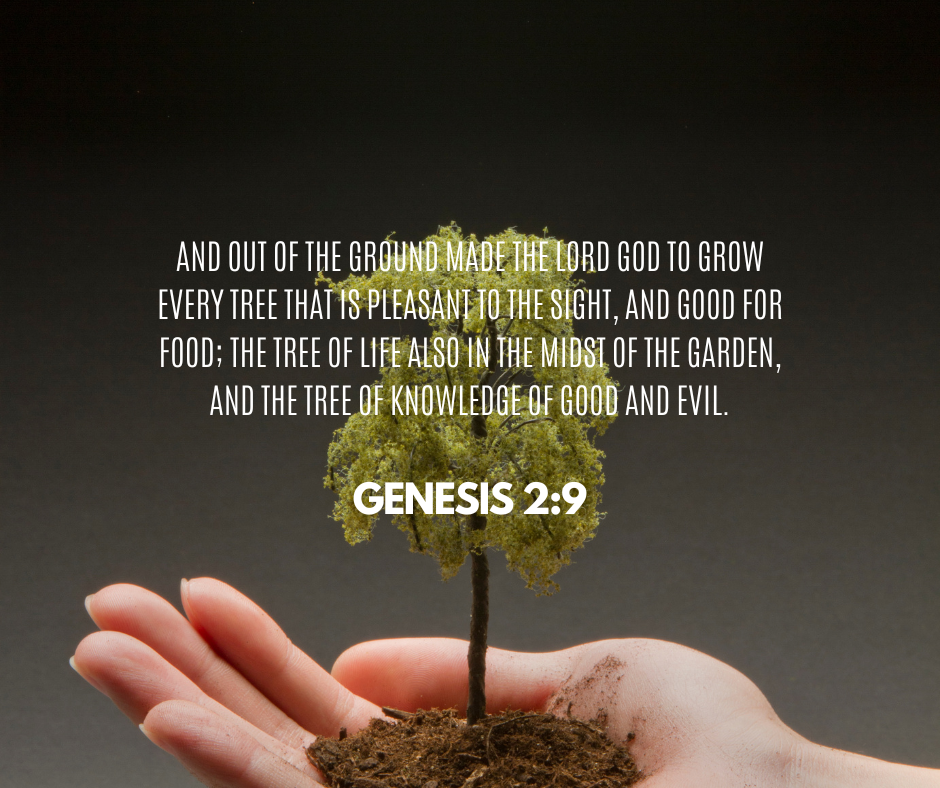
Critics often ask: “If God is loving and all-knowing, why would He place a forbidden tree in the Garden of Eden—a tree that, when eaten from, would bring death, suffering, and the fall of mankind?”
This question touches on the heart of human responsibility and divine purpose. To some, the tree of the knowledge of good and evil appears as a cruel setup, a divine test destined to fail. But from a biblical perspective, the presence of the tree reveals God’s love, holiness, and His design for true relationship with humanity.
A God of Relationship, Not Robots
God created man in His image (Genesis 1:26–27), with the capacity to reason, to choose, and to love. Love, by nature, must be voluntary. Forced obedience is not love at all, it is compulsion. For Adam and Eve to truly love and obey God, they had to have the freedom not to obey. The tree was the visible symbol of that freedom.
“And the Lord God commanded the man, saying, Of every tree of the garden thou mayest freely eat: But of the tree of the knowledge of good and evil, thou shalt not eat of it: for in the day that thou eatest thereof thou shalt surely die” (Genesis 2:16–17).
The command was clear, and the consequence was certain. Yet the opportunity to obey was real. This was not a trap, but a test—one designed not to induce failure, but to allow for freely chosen obedience.
The Tree and the Nature of Moral Freedom
Freedom of choice is not a flaw in God’s design, but a reflection of His character. He desires fellowship with those who choose Him willingly. Just as Deuteronomy 30:19 declares: “I call heaven and earth to record this day against you, that I have set before you life and death, blessing and cursing: therefore choose life, that both thou and thy seed may live” (Deuteronomy 30:19).
Adam and Eve were not tempted without knowledge, they were warned and given everything they needed to trust God’s goodness. The tree served as a daily reminder that God is God, and man is not—that trust in His Word is the foundation of life.
The Tree and God’s Holiness
The presence of the tree also testifies to the holiness of God. He is not only loving, but just. To reject His Word is to rebel against His character. God cannot overlook sin, for to do so would violate His own nature.
When Adam and Eve sinned, they brought spiritual death and corruption into the world—not because the tree itself was evil, but because disobedience to God is sin, and sin brings death (Romans 6:23). Yet even in judgment, God showed mercy. He clothed them (Genesis 3:21), promised a Redeemer (Genesis 3:15), and initiated the plan of redemption that would culminate in Christ.
The Tree and the Cross
In many ways, the tree of the knowledge of good and evil points us to another tree: the cross. On the first tree, man chose disobedience and death. On the second, Jesus Christ bore the penalty for that disobedience so that we might be restored to life.
“Christ hath redeemed us from the curse of the law, being made a curse for us: for it is written, Cursed is every one that hangeth on a tree” (Galatians 3:13).
“For as in Adam all die, even so in Christ shall all be made alive” (1 Corinthians 15:22).
Conclusion
The tree in Eden was not a cruel device, but a necessary element of moral responsibility. It affirmed man’s dignity as a free agent and revealed God’s desire for a relationship based on love and trust. Though man failed the test, God did not abandon him. Instead, He provided a way back through the cross. The first tree revealed our need; the second tree revealed God’s grace.