
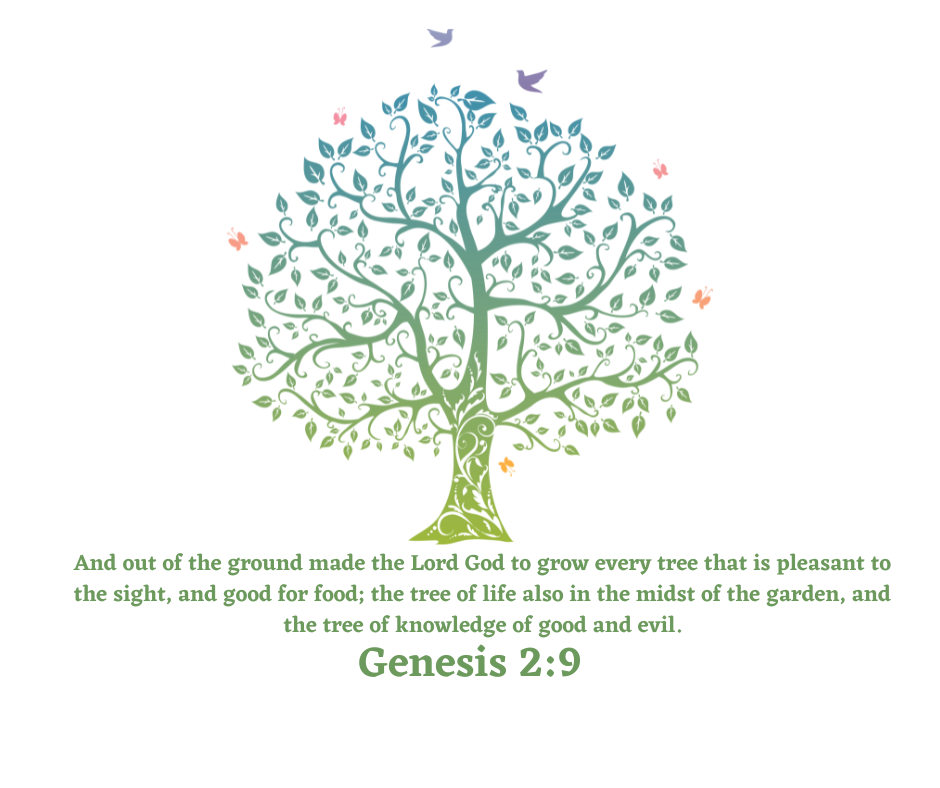
Throughout the ancient world, from Mesopotamia to Egypt, from Canaan to Greece, myths and legends echo a recurring human theme—the pursuit of immortality and paradise lost. This longing is often symbolized through sacred trees, life-giving plants, or guarded gardens. Kenneth Mathews notes that in many ancient Near Eastern stories, there is a shared motif of mankind striving to attain eternal life, only to fall short (1996). These myths reflect a profound and universal recognition: that man was made for life beyond death, but something has gone terribly wrong. While pagan myths distort this truth, the Genesis account preserves it in divine clarity and moral truth, revealing not only the reason for humanity’s mortality but the hope of redemption through Christ.
Mathews observes that ancient Mesopotamian literature contains a consistent theme: humanity’s failed quest to obtain the eternal life possessed by the gods. In the Epic of Gilgamesh, Gilgamesh descends to the depths of the sea to retrieve a plant that bestows life, only to lose it to a serpent—a poignant image with striking similarities to the Genesis account of the Fall (Genesis 3:1–6). This story reflects mankind’s yearning to regain a lost blessing and the sorrow of its continued denial. The Babylonian hero Utnapishtim and his wife, granted immortality by the gods after surviving a flood, serve not as conduits of life to others but as isolated recipients. Likewise, in the Sumerian flood narrative, Ziusudra escapes divine judgment and is rewarded with immortality in the paradise of Dilmun. In the Adapa myth, a man is offered divine food and drink that would have granted him life everlasting, but, misunderstanding its purpose, he rejects it and remains mortal. These stories carry tragic undertones and a consistent message: man is barred from eternal life, and divine immortality is unattainable through human striving alone.
Mesopotamian religions—such as those of the Sumerians, Akkadians, and Babylonians—speak often of sacred trees and plants as symbols of life and divine favor. In addition to the plant of life in Gilgamesh, the land of Dilmun is portrayed as a pristine, deathless paradise, paralleling Eden in purity and divine presence. The mythical king Etana seeks the “plant of birth” to bring fertility to his wife, ascending to the heavens in pursuit of divine aid. Despite their theological confusion, these myths reveal a common longing for what Genesis reveals was once real: a place where man walked with God and had access to the Tree of Life. The gods of Mesopotamia, however, are capricious and self-serving, whereas the God of the Bible is holy, just, and loving. In Genesis, God offers eternal life freely but conditionally—rooted in obedience and trust. The serpent, who appears almost neutral or incidental in Gilgamesh, is revealed in Scripture as a cunning deceiver and adversary (Genesis 3:1; Revelation 12:9). The Genesis account, preserved under divine inspiration, portrays mankind’s fall not as a cosmic accident or divine trickery, but as a moral rebellion against a good and holy Creator.
The Egyptian religious worldview also contains tree symbolism, particularly in connection with rebirth and the afterlife. The “Tree of Life” in Egyptian mythology is often linked to deities like Isis and Osiris. In Heliopolis, the Ished Tree was sacred and inscribed with the destinies of kings by the gods. Egyptian depictions of the afterlife, such as the Field of Reeds—a fertile land with rivers and eternal comfort—echo the imagery of Eden’s garden (Genesis 2:10). However, unlike Genesis, Egyptian myth does not present the tree as a moral test nor associate its fruit with obedience to a personal God. Instead, it is part of an ongoing cycle of death and rebirth, accessible through rituals and divine favor granted primarily to royalty and the priesthood. The Egyptian afterlife was thus elitist and mystical, not a universal offer based on covenantal relationship (Bayoumy, 2020). The moral clarity and universal accountability of Genesis stands in stark contrast to the exclusivity and ritualism of Egypt’s sacred narratives. While Genesis ends with the Tree of Life being barred due to sin (Genesis 3:24), it also points to a future restoration through God’s redemptive plan (Revelation 22:2).
Canaanite and Ugaritic religions reveal yet another expression of the sacred tree motif. Trees and wooden poles, especially the Asherah, were common objects of worship associated with fertility rites and idolatrous practices. These groves and sacred trees were often placed near altars as symbols of divine presence or power (Hadley, 2000). Yet unlike the biblical Tree of Life, which was part of God’s created order and placed under His command, these pagan trees became idols, venerated and used in rituals that perverted the worship of the true God. Scripture repeatedly warns Israel against planting Asherah poles or adopting Canaanite practices (Deuteronomy 16:21; Judges 3:7), showing that such nature worship was not a path to divine knowledge but a descent into moral and spiritual corruption. Where the Bible distinguishes sharply between Creator and creation, paganism collapses the two, making nature itself a false god. The Genesis account shows a God who is above His creation, who lovingly places man in the garden to “dress it and to keep it” (Genesis 2:15), not to worship it.
Zoroastrianism, the ancient faith of Persia, likewise preserves symbols of sacred vegetation and eternal life. The Haoma plant, believed to confer strength and perhaps immortality, was ritually consumed. The Gaokarena tree, a “Tree of Life,” is said to be planted in the sea and guarded from evil forces (Rezghirad, 2017). These images again echo the Genesis tree, which grew in Eden’s garden and was ultimately guarded by cherubim after Adam’s fall (Genesis 3:24). Yet Zoroastrianism is fundamentally dualistic, envisioning two opposing deities—one good, one evil—locked in cosmic struggle. This view is irreconcilable with the monotheism of Scripture, where evil originates not as a rival deity but as rebellion within a created order. While the Gaokarena tree represents healing and hope, it is embedded in a worldview that lacks the moral and theological unity of the Bible’s redemptive history.
Hinduism, particularly in its ancient Vedic form, holds the Ashvattha tree (a sacred fig tree) as a central cosmic symbol. In the Bhagavad Gita, it represents the ever-changing universe, with roots above and branches below, symbolizing the eternal spiritual reality behind temporal existence. The concept of maya, or illusion, suggests that human beings are deceived into believing the world is real, when in fact they are trapped in a cycle of ignorance and rebirth. This theme of deception has faint echoes of the Genesis serpent, yet the Hindu worldview does not identify sin as disobedience to a personal Creator, but rather as a failure to transcend illusion. There is no historical Fall, no single moment of rebellion, and no divine test such as that given to Adam and Eve. Trees in Hinduism are sacred in and of themselves, objects of reverence within a pantheistic cosmos (Kṛṣṇadaasa, 2025). The biblical story, by contrast, presents a linear redemptive history: creation, fall, redemption, and restoration—centered not in man’s enlightenment, but in God’s grace.
Greek mythology also preserves motifs of divine knowledge and sacred gardens. The story of Prometheus, who defies the gods to give fire (symbolic of knowledge) to mankind, mirrors the Genesis theme of forbidden wisdom. However, Prometheus is viewed as a noble rebel, punished by tyrannical gods. In contrast, Scripture presents the pursuit of forbidden knowledge as sinful rebellion against a good and just Creator (Genesis 3:6). Likewise, the Golden Apples of the Hesperides, guarded in a distant garden and conferring immortality, resemble the Tree of Life in Eden. Yet the gods of Olympus are morally compromised, their interactions with humanity often motivated by lust, jealousy, or vengeance (Burkert, 1987). The God of Genesis, however, is perfectly righteous, acting in holiness and covenant love. Greek myths reflect a fallen imagination, where divine power is to be tricked or stolen, not received through grace and faith.
In conclusion, although sacred trees, life-giving plants, and paradise gardens appear in many ancient religious traditions, the Genesis account stands uniquely authoritative and theologically coherent. It teaches the existence of one sovereign God, the reality of human accountability, a historical moral Fall, and the hope of restoration through Jesus Christ. The Tree of Life, once barred to sinful man, reappears in the final vision of Revelation—not in a mythical realm, but in the eternal kingdom of God, where the redeemed will eat of its fruit freely (Revelation 22:2). The common threads among these myths point not to independent invention, but to a shared cultural memory of real events—preserved faithfully in Scripture and distorted in pagan traditions after the dispersion at Babel (Genesis 11). These echoes in the myths of the nations affirm the truth of Romans 1:23, that man, having known God, turned to idolatry, changing “the glory of the uncorruptible God into an image.” But the Bible, inspired and preserved by God, leads us not to myth, but to truth—the truth that eternal life is once again available, through Jesus Christ our Lord.