
Philo of Alexandria, a Hellenistic Jewish philosopher active during the time of Christ, is often cited as one of the earliest thinkers to advance an allegorical interpretation of the Genesis creation account. Profoundly influenced by Platonic and Stoic philosophy, Philo attempted to harmonize Greek metaphysical concepts with the Hebrew Scriptures. Rather than viewing Genesis as a literal history of the world’s beginnings, Philo interpreted the Eden narrative as a symbolic drama concerning the human soul.
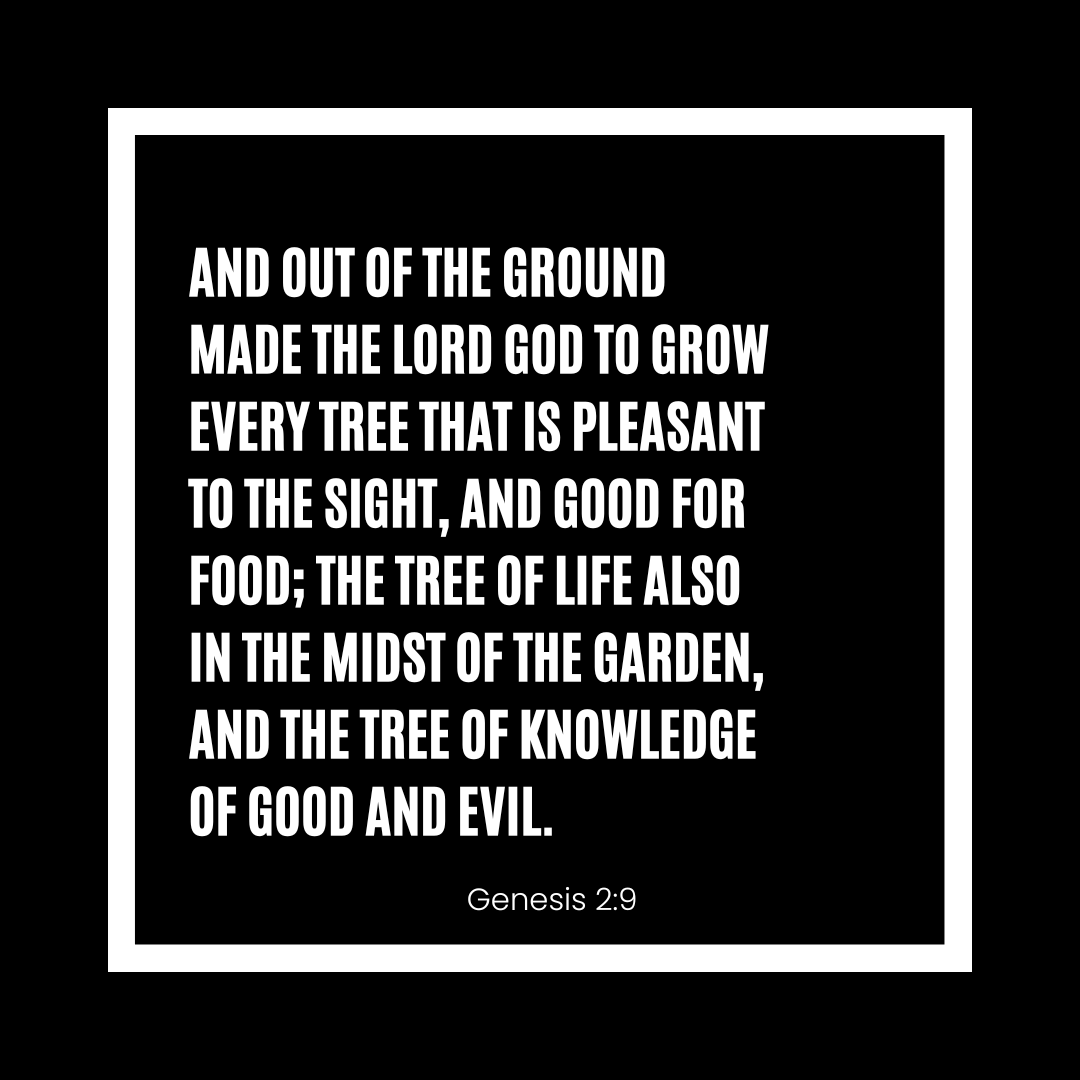
In Philo’s framework, the Tree of Life represented divine wisdom or the Logos—a rational principle he viewed as the intermediary between God and creation. Notably, this notion of the Logos would later be mirrored in Christian theology (John 1:1–14), though with a crucial difference: Christian doctrine identifies the Logos not as an abstract principle but as the incarnate person of Jesus Christ. Meanwhile, Philo interpreted the Tree of Knowledge of Good and Evil as a symbol of human moral reasoning, or the soul’s dual capacity for right and wrong choices. For him, the Edenic story illustrated the tension between divine reason and the limitations of human intellect, casting the Fall not as a historic transgression but as a philosophical metaphor for the soul’s descent into moral ambiguity (n.d.).
Centuries later, Moses Maimonides, the revered medieval Jewish philosopher and rabbi, offered his own allegorical reading in The Guide for the Perplexed. Maimonides did not view the Tree of Knowledge as containing forbidden or corrupt information. Rather, he interpreted the eating of its fruit as the moment humanity became morally aware. Prior to the Fall, Adam and Eve supposedly operated on a higher plane of intellect—one that understood objective truth and falsehood. After eating the fruit, their perception shifted to subjective categories of good and evil, which Maimonides regarded as a lower form of cognition. The true sin, according to him, was disobedience, which resulted in a tragic intellectual downgrade (1995).
Both Philo and Maimonides represent a trend within certain strands of Jewish philosophy to spiritualize or psychologize the text of Genesis. Their allegorical interpretations elevate philosophical concepts such as reason, consciousness, and moral awareness, and attempt to read the story of Eden as an internal moral struggle rather than an external, historical event. While intellectually stimulating, these readings significantly diverge from the understanding of Scripture upheld by both ancient Judaism and historic Christianity.
The primary issue with these allegorical interpretations is that they undermine the literal and historical foundation of the Genesis account. Scripture is not silent about the reality of Adam and the Fall. The New Testament consistently treats Adam as a real historical person, whose disobedience brought sin and death into the world.
Paul writes in Romans 5:12, “Wherefore, as by one man sin entered into the world, and death by sin; and so death passed upon all men, for that all have sinned.” He continues in 1 Corinthians 15:22, “For as in Adam all die, even so in Christ shall all be made alive.”
If Adam were merely a symbol of moral awakening—as in Philo’s and Maimonides’s readings—Paul’s entire theological argument for original sin and redemption through Christ would collapse. The Gospel depends on the historicity of the Fall to explain why mankind needs salvation through the second Adam, Jesus Christ (cf. Romans 5:14–19).
Additionally, the narrative in Genesis 2 and 3 is written in a straightforward historical style. It contains specific locations (the Garden of Eden, the rivers of Havilah, Gihon, etc.), named individuals (Adam, Eve, the serpent), and a clear sequence of actions and divine judgments. There is no indication in the text itself that the account is intended as allegory.
Moreover, God’s warning in Genesis 2:17—“for in the day that thou eatest thereof thou shalt surely die”—implies a real consequence for a real action. The death introduced was both spiritual and, eventually, physical, as confirmed by the curse pronounced in Genesis 3 and later biblical theology (cf. Romans 6:23).
Conclusion
While the philosophical interpretations of Philo and Maimonides demonstrate the deep influence of Greek thought on Jewish exegesis, they ultimately fall short of the clear and authoritative teaching of Scripture. By treating the Genesis account as symbolic rather than historical, they obscure the seriousness of sin and the necessity of divine redemption. The biblical record stands not merely as a mythological tale, but as the foundation of the Christian worldview: that humanity fell through one man’s disobedience and can be restored only through one man’s righteousness—Jesus Christ, the true Tree of Life.