
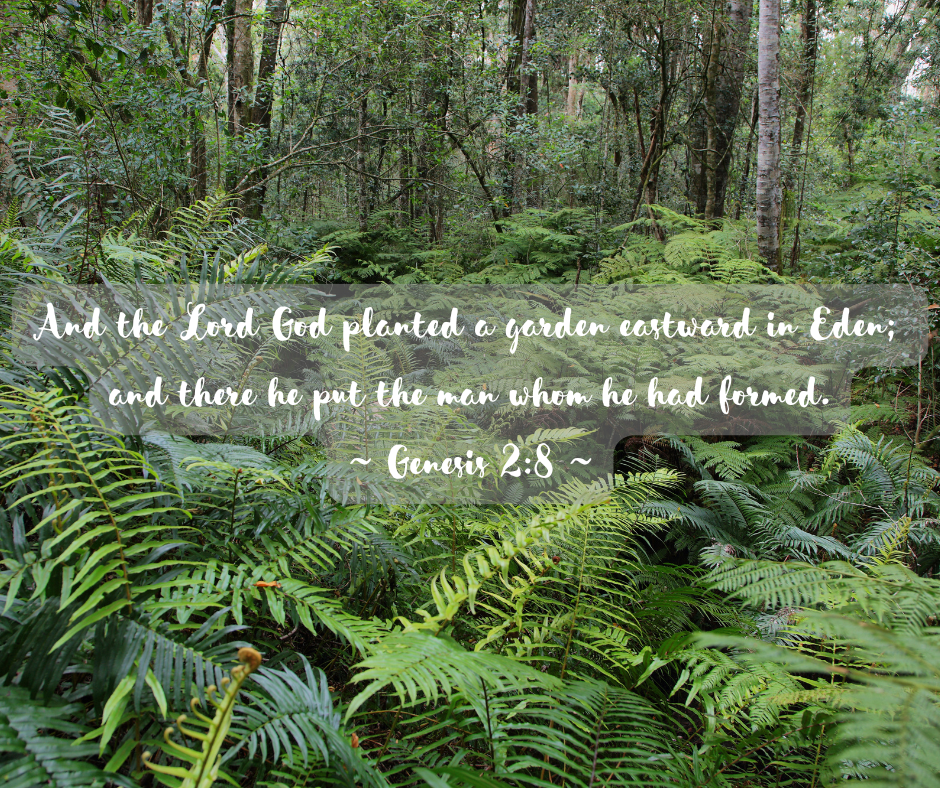
Throughout history, the story of the Garden of Eden has inspired numerous interpretations—some allegorical, others mystical or even radically unorthodox. While the Bible presents Eden as a real, historical place (Genesis 2:8), many traditions, influenced by philosophy, mysticism, or dualism, have reimagined it as a symbol or myth. These interpretations, though often intellectually stimulating, must be weighed carefully against the authority of Scripture. As 2 Timothy 3:16 declares, “All scripture is given by inspiration of God, and is profitable for doctrine, for reproof, for correction, for instruction in righteousness.”
Allegorical Interpretations: From Philosophical Symbolism to Modern Mysticism
Philo of Alexandria, a 1st-century Hellenistic Jewish philosopher, offered one of the earliest allegorical readings of Genesis. Deeply influenced by Greek philosophy—particularly Platonism and Stoicism—Philo believed the Garden of Eden symbolized the soul’s virtues, and that the “east” represented the origin of spiritual light and wisdom. In his writings, Eden was not understood as a literal garden, but as a metaphor for the mind’s higher faculties, capable of grasping divine truth (2018). This intellectualized reading diminishes the biblical narrative’s plain meaning in favor of abstract ideals.
Origen of Alexandria, a 3rd-century Christian theologian, also adopted an allegorical approach. He saw Eden not as a literal place but as a spiritual state. For Origen, the Garden represented the inner life of the believer, the Church, or the soul itself. While Origen sought to illuminate the spiritual richness of Scripture, his approach—common in the Alexandrian school—often bypassed the historical and grammatical context of the biblical text (Edwards, 2014). Though well-intentioned, such methods risk substituting subjective insight for the plain reading of God’s Word.
In the 12th century, the Jewish philosopher Maimonides advanced a rationalistic interpretation in his Guide for the Perplexed. He viewed Eden as an allegory of the human intellect and its pursuit of knowledge. For Maimonides, Adam’s fall represented a philosophical transition from pure intellectual contemplation to moral responsibility (1956). While thoughtful, this interpretation recasts a spiritual and moral rebellion against God (Genesis 3:6) as a developmental stage in human cognition—an idea foreign to the biblical witness.
Christian Science, a 19th-century movement founded by Mary Baker Eddy, reinterprets Eden as a metaphor for spiritual consciousness (2023). In this view, the Genesis account is not history but a symbolic narrative about humanity’s awakening from material delusion to spiritual reality. Such teachings deny the historicity of Adam and Eve, the existence of sin as rebellion, and the need for redemption through Christ—contradicting Romans 5:12, which states, “Wherefore, as by one man sin entered into the world, and death by sin; and so death passed upon all men, for that all have sinned.”
Mystical and Metaphysical Views: Kabbalah, Unity, and Theosophy
Kabbalistic Judaism offers a mystical interpretation of Eden rooted in the sephirotic tree—the ten emanations through which God interacts with creation. In this view, the Garden represents a spiritual dimension where the Shekhinah, the divine presence, dwells. The “east” symbolizes divine light, and the entire Eden narrative is read as a map of the soul’s journey through cosmic realms (Scholem, 2011). While Kabbalah draws from Jewish tradition, it introduces ideas more akin to Gnosticism and Neoplatonism than biblical theology. Its esoteric methods often obscure, rather than illuminate, the meaning of the inspired text.
The Unity School of Christianity, another metaphysical movement founded in the late 19th century, interprets Eden as a state of human consciousness. The Garden is symbolic of mental harmony, divine potential, and inner peace. This interpretation redefines sin as ignorance and redemption as mental clarity—again eroding the biblical concepts of sin, judgment, and atonement (n.d.). The Bible teaches that Adam’s sin brought death, not just disorder (Romans 6:23), and that redemption is found not through mental development but through faith in Christ (John 14:6).
Theosophy and occult traditions, such as those espoused by Helena Blavatsky, take this even further by embedding Eden into a cosmic myth. Here, the Garden becomes a forgotten spiritual realm—perhaps a lost Atlantean dimension—inhabited by advanced beings like Adam and Eve. The fall is reimagined as a descent from divine consciousness into material entrapment (Blavatsky, 1888). These interpretations blend Eastern religion, Gnostic dualism, and occult speculation, bearing no resemblance to the scriptural account and directly contradicting the biblical doctrine of creation, sin, and salvation.
Radical Reversals: Eden as a Prison in Gnostic and Dualist Teachings
Perhaps the most heretical interpretations of Eden come from Gnostic and dualist sects such as the Manichaeans, Bogomils, and Cathars. These groups rejected the God of the Old Testament, claiming He was a lesser or evil deity (the Demiurge). Accordingly, Eden was not a paradise but a prison—a false paradise crafted to entrap souls in the material world. The serpent, instead of being the deceiver, was portrayed as a liberator offering gnosis, or secret knowledge (Barnstone & Meyer, 2009). These teachings directly oppose the Bible, which affirms, “God saw every thing that he had made, and, behold, it was very good” (Genesis 1:31), and calls Satan “a liar, and the father of it” (John 8:44). To deny God’s goodness in creation is to blaspheme the Creator Himself.
A Biblical Response: The Authority of God’s Word
While some allegorical or symbolic insights can serve to highlight deeper truths in Scripture, they must never be used to undermine the plain, historical, and grammatical meaning of the biblical text. Genesis presents Eden as a real place. Adam and Eve were historical figures, not mythological archetypes (see Luke 3:38; Romans 5:12–19). The fall was a real event that brought real consequences—sin, death, and separation from God.
Allegorical and mystical interpretations, when they deny or distort these truths, lead to error. They often reflect human philosophies rather than divine revelation (Colossians 2:8). The Apostle Paul warned against “profane and vain babblings, and oppositions of science falsely so called” (1 Timothy 6:20). Scripture interprets itself, and the narrative of Eden sets the stage for the entire redemptive history culminating in Jesus Christ—the “second Adam” who restores what the first Adam lost (1 Corinthians 15:45).
Conclusion
The story of Eden is foundational to the Christian faith. While various traditions throughout history have attempted to allegorize, spiritualize, or even invert its meaning, the Bible presents Eden as a real place, a real beginning, and the stage for a real fall. Attempts to reinterpret the Garden as merely symbolic—however intellectually or mystically appealing—fall short of the truth revealed in God’s Word. As believers, we are called to rightly divide the Word of truth (2 Timothy 2:15), affirming the authority of Scripture against all human speculation.