
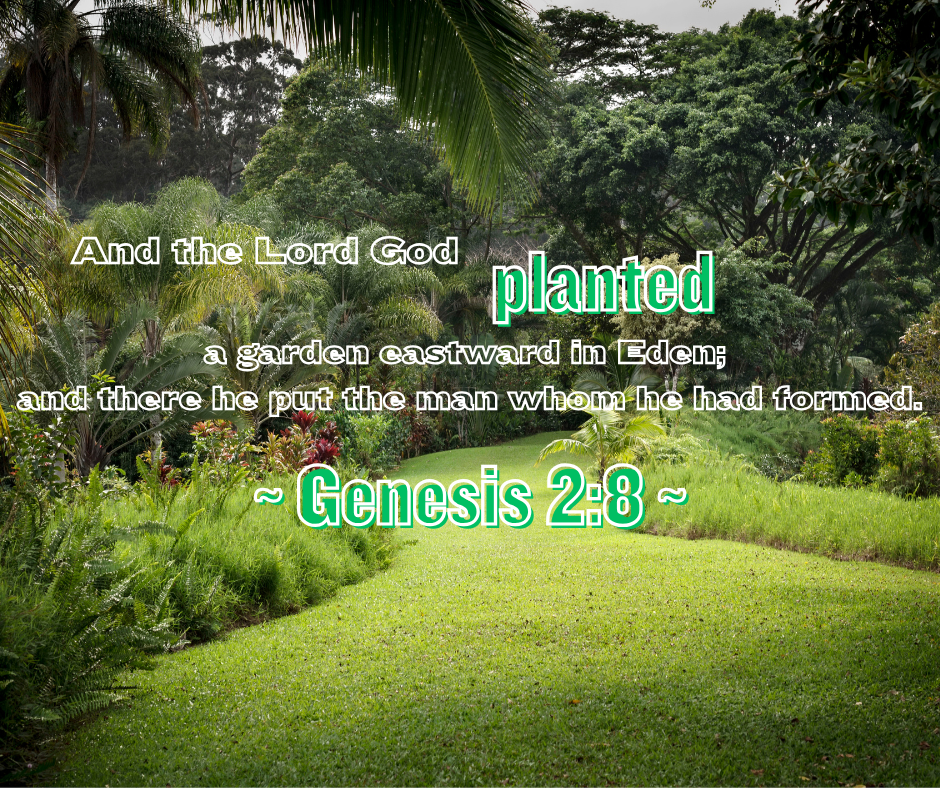
Henry Morris, in his commentary The Genesis Record, offers a compelling interpretation of Genesis 2:8. He writes, “This planting was done directly by God, just as He had formed man’s body and breathed into his nostrils directly, not merely by an impersonal command as had been the case when plants were first made on the third day” (1976, p. 87). According to Morris, this verse presents God not only as Creator but also as an intentional Gardener—one who personally prepares a special place for man, just as He personally formed him from the dust.
The Language of Intimacy and Intentionality
Morris’s interpretation centers on the specific language of the text. The Hebrew verb translated as “planted” (nāṭaʿ) indicates deliberate, hands-on action. In contrast to Genesis 1—where God brings creation into being through spoken command—Genesis 2 portrays a more intimate and personal divine involvement. The formation of man (Genesis 2:7) and the planting of the garden (Genesis 2:8) are closely linked, both described as direct acts of God.
The narrative structure and use of the covenantal name “LORD God” (Yahweh Elohim) in Genesis 2, as opposed to the more general Elohim in Genesis 1, also support the idea of relational intent. God is not distant or abstract; He is personally engaged in shaping both man and his environment.
Theological Support for a Direct Planting
Morris is not alone in his interpretation. Other conservative theologians affirm the view that Genesis 2:8 describes a special and direct act of divine planting. Keil and Delitzsch (1996), in their classic Commentary on the Old Testament, argue that the garden was not simply a section of natural vegetation but a deliberately cultivated area set apart by God. They emphasize that the passage presents the garden as a prepared place, a divine sanctuary of sorts, designed for human flourishing.
John MacArthur (2019), in The MacArthur Study Bible, likewise emphasizes that the garden was “personally prepared by God” as an ideal home for Adam. He underscores that the text speaks to God’s intentional design and personal care, contrasting with the broader, more formulaic creation of plant life on the third day in Genesis 1.
Allen P. Ross (1998), in Creation and Blessing, also supports this interpretation. He describes Eden as a divinely arranged sanctuary, crafted for sacred relationship and purpose. Ross connects this imagery to later biblical themes such as the tabernacle, the temple, and even the New Jerusalem—each a prepared dwelling for the presence of God with His people.
Contrasting Views from Critical Scholarship
By contrast, critical scholars who adhere to the Documentary Hypothesis often interpret Genesis 2 as a separate and older source than Genesis 1. They tend to see the intimate depiction of God in Genesis 2 as the product of a distinct literary and theological tradition, rather than as a meaningful indication of God’s personal involvement. In this view, the anthropomorphic language—God forming, planting, breathing—is not intended to convey theological truth but reflects the narrative style of the Yahwist author (Friedman, 2003).
Moreover, some liberal theologians and symbolic interpreters regard the Eden account as myth or allegory, seeing the planting of the garden as a metaphor for the establishment of human moral order, rather than a literal act of divine cultivation.
A Theologically Sound Interpretation
Despite these opposing views, the interpretation offered by Morris stands as a valid and theologically rich understanding of Genesis 2:8. The narrative clearly conveys a shift in tone from the sovereign decrees of Genesis 1 to the personal, relational acts of Genesis 2. The text strongly supports the idea that God planted the garden as a direct act of loving preparation for humanity.
This interpretation aligns with a broader biblical theology that presents God as personally involved with His creation—from Eden, to Sinai, to the cross, and ultimately to the New Heaven and New Earth. Thus, Morris’s view is not only exegetically sound but also deeply consistent with the overarching narrative of Scripture.