
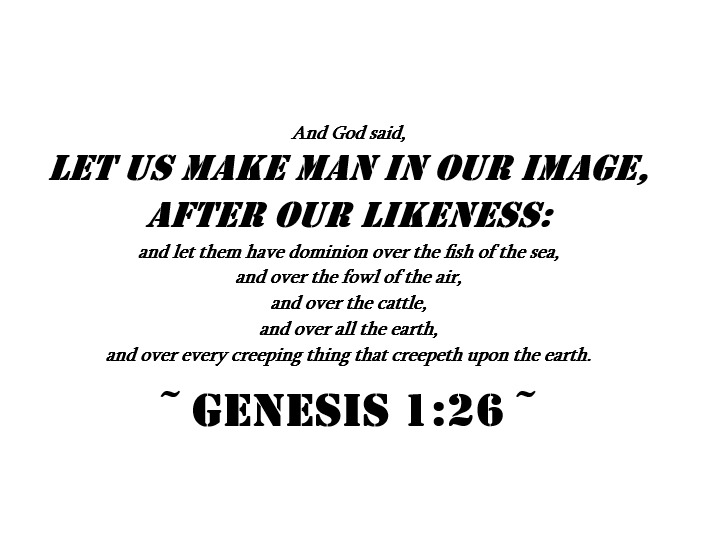
The doctrine of humanity being created in the “image of God” is a profound and mysterious truth, ultimately beyond human comprehension. It is unsurprising, then, that there has been significant diversity of thought regarding its meaning (Morris H. M., The Genesis Record, 1976, pp. 73–74). I concur with Wenham’s observation that “none of the suggestions seem entirely satisfactory, though there may be elements of truth in many of them” (Wenham, 1987, p. 31).
Among the various interpretations, the ontological and relational views seem most compelling. The ontological view emphasizes humanity’s unique attributes—reason, moral judgment, and spiritual communion—affirming the dignity of all people as bearers of the divine image and providing a foundation for understanding humanity’s eternal purpose and accountability before God. The relational view reflects the communal nature of the triune God, highlighting love, unity, and covenantal relationships as central to the imago Dei.
Given humanity’s fallen state, the restoration of the image of God through Christ must also remain central to any understanding of this doctrine. The fractured imago Dei is progressively restored in believers through sanctification, with ultimate perfection realized in glorification.
The other interpretations offer valuable perspectives that deepen our understanding of this multifaceted doctrine:
- The Functional View emphasizes humanity’s God-given role as stewards of creation, aligning with Scripture’s mandate to care for the earth. It inspires ecological responsibility and social justice as practical expressions of the imago Dei.
- The Representative (Royal) View underscores humanity’s dignity and purpose as God’s vice-regents, entrusted with His authority to govern creation. This view also affirms the universal equality of all people as royal image-bearers.
- The Christological View, rooted in the redemptive narrative, highlights Christ as the perfect image of God. It provides hope and direction by focusing on sanctification, glorification, and the restoration of the divine image through Christ’s work.
- The Eschatological View offers a forward-looking perspective, assuring believers of future perfection. It links the imago Dei to God’s ultimate redemptive plan, culminating in eternal fellowship with Him in a restored creation.
- The Triune View provides a holistic understanding of humanity’s nature, emphasizing relationality and communion as central to the imago Dei. This view mirrors the unity and love within the Trinity.
- The Physical View highlights the intentionality behind human design, demonstrating how the human body reflects God’s purposes. It connects creation with redemption and affirms the body’s dignity as a vessel for divine purposes.
Each of these interpretations contributes a unique facet to the broader understanding of the image of God, collectively revealing its richness and complexity.
A Synthesis of Perspectives
The imago Dei encompasses every aspect of humanity—ontological, relational, functional, and vocational. These interpretations converge in several key truths:
- Human Dignity
All people bear the divine image, affirming their inherent worth and equality (Genesis 9:6; James 3:9). - God’s Purpose
Humanity is called to reflect God’s character, steward creation, and live in fellowship with Him and others. - Christ-Centered Restoration
Through Christ, the fractured imago Dei is progressively restored in believers, culminating in glorification and eternal communion with God.
By integrating these perspectives, we can appreciate the multifaceted nature of the imago Dei. Each view contributes to a richer understanding of humanity’s creation in God’s image, the effects of the Fall, and the redemptive work of Christ. Together, they illuminate the depth and beauty of this divine truth, reflecting God’s glory and His purposes for humanity.