
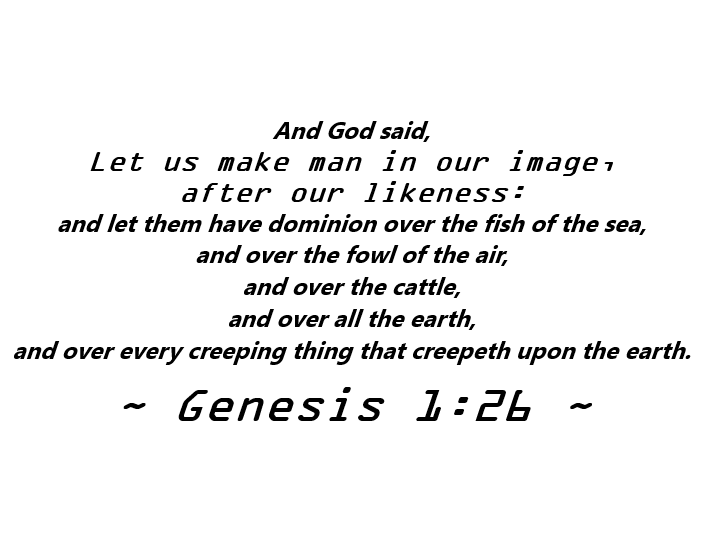
The concept of the “Triune View” is deeply rooted in the theological assertion that human beings are uniquely created in the image of the triune Godhead—Father, Son, and Holy Spirit. This belief finds its foundation in Genesis 1:26, where God declares, “Let us make man in our image, after our likeness.” The plural phrasing, “our image,” strongly implies the collaborative work of the Trinity in the act of creation and suggests that humanity reflects this divine nature in a profound way. This reflection is not merely functional but ontological, meaning it pertains to the very essence of what it means to be human.
The Unique Composition of Man
God’s creative work displays a progression in complexity:
- Plants: Representing the simplest form of life, plants possess only a physical body. They exhibit unconscious biological life, responding to stimuli and fulfilling their purpose within creation.
- Animals: Possessing both a body and a soul (nephesh), animals demonstrate self-conscious life. They have emotions, instincts, and an ability to interact with their environment at a higher level than plants. This is supported by Genesis 1:24, which refers to “living creatures” (nephesh chayyah).
- Humans: Standing apart as the pinnacle of creation, humans possess not only a body and a soul but also an eternal spirit. The spirit, unique to humanity, enables direct communion and fellowship with God. This spirit aligns humanity uniquely with the Creator and imparts the capacity for worship, morality, and eternal purpose.
The Image of God in Humanity
The “image of God” (imago Dei) is not found in physical resemblance, as God is spirit (John 4:24), but in the attributes and capacities granted to humanity. This image is chiefly expressed in two key aspects:
1. Man’s Tri-Unity: A Reflection of God’s Nature
Humanity mirrors God’s triune nature through the integration of three components: spirit, soul, and body. As the Apostle Paul writes in 1 Thessalonians 5:23, “And the very God of peace sanctify you wholly; and I pray God your whole spirit and soul and body be preserved blameless unto the coming of our Lord Jesus Christ.”
- Spirit: The spirit is the dimension of human existence that connects with God. Paul explains in 1 Corinthians 2:11 that the spirit of man is what allows him to comprehend and interact with spiritual truths. The spirit grants humans God-consciousness, enabling worship and divine communion.
- Soul: The soul represents self-conscious life, encompassing intellect, emotions, will, and desires. While animals also possess a soul (nephesh), the human soul is uniquely expansive. It is the seat of moral reasoning, creativity, and the capacity for deep relationships, as exemplified in Psalm 42:1-6.
- Body: The body is the physical vessel that allows humans to interact with the material world. It is essential to human existence, serving as the interface through which the soul and spirit engage with the environment. Despite its mortality, the body’s dignity and significance are affirmed by the promise of resurrection (1 Corinthians 15:42-44; John 5:28-29).
2. Man’s Moral Nature: A Reflection of God’s Attributes
Humanity reflects God’s moral nature through attributes such as reasoning, creativity, and the ability to discern good and evil. This moral resemblance is foundational to humanity’s unique role as stewards of creation (Genesis 1:28). Although marred by the Fall, this aspect of the divine image is partially restored through salvation in Christ. Believers are called to conform to the image of Christ, the perfect representation of God’s moral nature (Romans 8:29).
Scriptural Foundation for Humanity’s Triune Nature
Throughout Scripture, the triune nature of humanity is evident:
- Body: Represents world-consciousness, enabling interaction with the physical environment through sensory perception.
- Soul: Represents self-consciousness, functioning as the seat of emotions, intellect, and will.
- Spirit: Represents God-consciousness, allowing humans to engage in worship and receive divine revelation (John 4:24).
Paul illustrates the tension between these components in Romans 7:23-24, where he acknowledges the conflict between the sinful tendencies of the body and the redeemed spirit. This tension underscores the need for salvation and sanctification, which ultimately result in the full restoration of humanity’s triune nature through the resurrection.
Theological Implications
Reflecting God’s Relational Nature
Just as the Trinity exists in eternal communion, humanity is designed for relationality—with God, with others, and with creation. This relational design emphasizes love, fellowship, and interdependence as central to human purpose.
Fellowship with the Creator
The human spirit, as the locus of God-consciousness, is essential for communion with God. Through the regeneration of the spirit by the Holy Spirit (John 3:6), humans are restored to their intended relationship with the Creator.
Unity in Diversity
The integration of body, soul, and spirit within one being mirrors the unity and diversity of the triune Godhead. This design highlights the interconnectedness of human faculties and their unified purpose in glorifying God.
Summary of the Triune View
The triune view of humanity underscores the unparalleled dignity and purpose of human life. While plants and animals reveal aspects of God’s creative power, only humanity possesses the full capacity for God-consciousness, moral reasoning, and eternal communion with the Creator. This profound design sets humanity apart as the crown of creation, entrusted with the responsibility to live in alignment with the divine image.
Believers are called to glorify God through the harmonious integration of their spirit, soul, and body, living as reflections of His triune nature (1 Corinthians 6:19-20). Ultimately, the hope of resurrection ensures the restoration of humanity’s triune design, enabling eternal fellowship with the triune God in perfect unity and joy.