
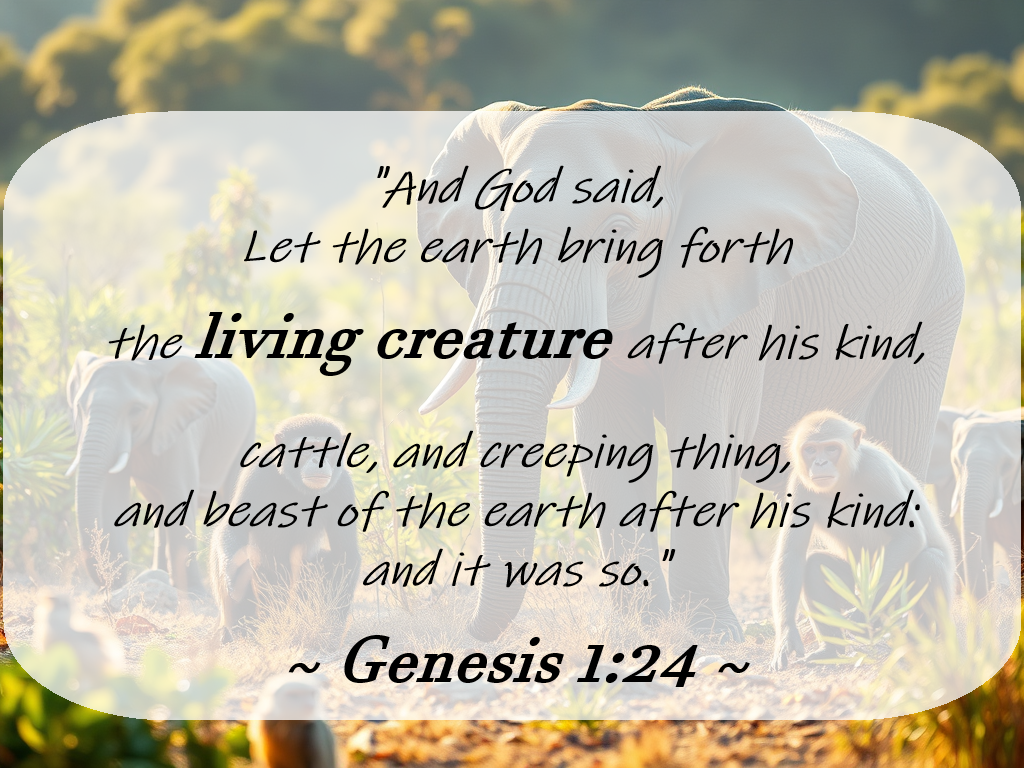
Understanding the nature of life as described in Scripture is crucial to grasping the differences between plants, animals, and humanity. The term “living creature,” translated from the Hebrew word nephesh, holds significant theological implications, particularly in Genesis 2:7, where God breathes life into man, making him a “living soul.” This article explores the distinctions between unconscious, conscious, and self-conscious life in light of the Bible.
Understanding Nephesh: A Biblical Foundation
The Hebrew word nephesh is often rendered as “soul” or “living creature,” depending on context. In Genesis 2:7, man becomes a “living soul” (nephesh chayyah) when God breathes into him the breath of life. This divine act sets humanity apart from the rest of creation, not just as living beings but as bearers of God’s image (Genesis 1:26-27).
Scofield’s commentary in The Old Scofield Study Bible (1996, p. 5) notes that nephesh implies “self-conscious life, as distinguished from plants, which have unconscious life.” He most likely intended to imply that animals possess a nephesh in the sense of conscious life rather than self-conscious life. This careful distinction underscores that while animals are living beings with awareness of their surroundings, they do not share the self-conscious, rational, and moral capacities unique to humanity.
The Hierarchy of Life in Creation
- Unconscious Life: Plants
Plants, as part of God’s creation, have life in a biological sense. They grow, reproduce, and respond to stimuli, but they lack consciousness or awareness. Their life is described in Genesis 1:11-12, where God commands the earth to bring forth vegetation. Plants fulfill their purpose within creation but are not described as nephesh. - Conscious Life: Animals
Animals, according to Scripture, possess consciousness. This allows them to experience sensations, emotions, and awareness of their environment. Genesis 1:20-25 uses nephesh chayyah to describe animals, indicating they are “living creatures” with a God-given life force. However, while animals have conscious life, there is no biblical evidence they possess the self-consciousness or moral awareness attributed to humanity. - Self-Conscious Life: Humanity
Humanity is unique in creation. The breath of life imparted by God (Genesis 2:7) and being made in His image (Genesis 1:26-27) endow humans with self-consciousness. This includes the ability to reflect on one’s existence, engage in abstract thought, and have a personal relationship with God. This self-conscious nature underscores human responsibility, moral accountability, and eternal destiny.
Self-Consciousness and the “Mirror Test”
There is ongoing debate about whether certain animals possess self-consciousness, with some researchers pointing to studies like the “mirror test” as evidence. In this test, animals such as dolphins, elephants, and primates are observed interacting with their reflections. Proponents argue that when an animal recognizes itself in a mirror and appears to examine a mark placed on its body, it demonstrates self-awareness. While such behavior may seem to suggest a level of self-recognition, the findings remain highly contested and far from conclusive.
The Limitations of the Mirror Test
Critics of the mirror test argue that an animal’s reaction to its reflection may not represent true self-consciousness. Instead, it might stem from curiosity, social instinct, or a conditioned response. For example, an animal might interpret the reflection as another member of its species or an unfamiliar stimulus rather than as a representation of itself. Furthermore, passing the mirror test does not necessarily indicate an ability to reflect on one’s existence, make moral choices, or engage in abstract thought—hallmarks of true self-consciousness.
Animals may exhibit impressive levels of intelligence and problem-solving skills, but intelligence is not synonymous with self-awareness in the biblical sense. For instance, many animals demonstrate complex social behaviors, communication, and tool use, which highlight their God-given abilities. However, these behaviors are instinctual and functional rather than evidence of a moral or spiritual nature.
The Biblical Perspective on Self-Consciousness
From a biblical standpoint, the capacity for self-consciousness, as humans experience it, is intricately tied to bearing the image of God (imago Dei). In Genesis 1:26-27, humanity is uniquely described as being created in God’s image. This distinction includes spiritual awareness, moral reasoning, and the capacity for eternal fellowship with the Creator—qualities not attributed to animals in Scripture.
While animals are described as possessing nephesh (life or soul) in Genesis 1:24-25, this life is fundamentally different from the self-conscious, rational, and moral capacities given to humanity in Genesis 2:7. The biblical narrative affirms the unique status of humans as stewards of creation (Genesis 1:28) and as beings with the potential for redemption and eternal life through Christ (John 3:16). Animals, while valued and cared for by God (Psalm 104:10-18), are not described as sharing in this spiritual destiny.
A Balanced View of Animal Intelligence
Acknowledging animal intelligence and remarkable behavior does not undermine the biblical understanding of humanity’s uniqueness. Instead, it reveals the creativity and wisdom of God in designing creatures with diverse abilities suited to their roles in creation. Animals’ problem-solving, social interactions, and adaptability testify to the complexity of life and God’s provision for all His creatures (Job 12:7-10). However, these traits remain distinct from the moral and spiritual capacities that define humanity.
Theological Implications
This understanding of life as revealed in Scripture carries profound theological implications that shape our worldview and influence our relationships with God, creation, and one another. It highlights humanity’s unique role, underscores the value of animals, and clarifies eternal truths central to the gospel message.
1. Human Uniqueness: Created in God’s Image
Humanity’s self-conscious life reflects our extraordinary status as bearers of God’s image (imago Dei), as described in Genesis 1:26-27. Unlike animals, humans possess moral reasoning, spiritual awareness, and the capacity to engage in a personal relationship with God. These qualities set us apart and define our role as stewards of creation (Genesis 1:28).
As stewards, humans are entrusted with the care and management of God’s creation, reflecting His character by exercising dominion with wisdom, responsibility, and compassion. Beyond this earthly role, humanity is also designed for eternal fellowship with God. Our self-conscious life allows us to comprehend spiritual truths, worship God, and respond to His call for salvation. The breath of life imparted by God in Genesis 2:7 signifies not only physical life but also a spiritual capacity that points to an eternal purpose.
2. Animal Value: Treasured by God
While animals do not share the spiritual and eternal capacities of humanity, they are nonetheless an integral part of God’s creation and are deeply valued by Him. Proverbs 12:10 teaches that “a righteous man regardeth the life of his beast,” underscoring the biblical mandate to treat animals with care and respect.
Animals are described as part of God’s “good” creation in Genesis 1:20-25, and their role in the ecosystem demonstrates His intricate design and sustaining power. Throughout Scripture, animals are shown as recipients of God’s providential care (Psalm 104:10-18), and even in the eschatological vision of Isaiah 11:6-9, animals are depicted as part of a restored and harmonious creation.
Recognizing the value of animals calls us to reflect God’s character in our treatment of them. While their role differs from humanity’s, animals inspire awe at the Creator’s ingenuity and provide opportunities for humans to exercise stewardship, kindness, and gratitude.
3. Eternal Destiny: A Focus on Redemption
Scripture does not indicate that animals possess eternal souls in the same way humans do. While animals have nephesh (life), they lack the self-conscious, spiritual nature that enables humans to grasp the concepts of sin, salvation, and eternity. The Bible’s focus on redemption is centered on humanity, as we alone are created in God’s image and hold moral accountability before Him.
John 3:16 declares, “For God so loved the world, that he gave his only begotten Son, that whosoever believeth in him should not perish, but have everlasting life.” This promise is uniquely directed to humanity, emphasizing our spiritual capacity and need for redemption through Christ. Through His death and resurrection, Jesus provides the path for humans to be reconciled to God, securing eternal life for those who believe.
While animals do not share in this redemptive narrative, their existence nonetheless glorifies God and testifies to His creative power. Romans 8:19-23 alludes to the broader creation longing for restoration, which suggests that animals, as part of creation, will somehow participate in the renewal of all things. However, this participation remains distinct from the eternal destiny of redeemed humanity.