
The celebration of Christmas holds a central place in the hearts and homes of Christians around the world. Rooted in the birth of Jesus Christ, Christmas is not merely a festive season but a sacred reminder of God’s love and plan of redemption for humanity. This article will explore the historical origins of Christmas, its biblical significance, and its enduring importance to Christians.
The Biblical Foundation of Christmas
At the heart of Christmas lies the profound mystery and joy of the birth of Jesus Christ, the Son of God, as recounted in the Gospels of Matthew and Luke. This event, known as the Incarnation, marks the moment when the eternal Word took on human flesh to dwell among us, fulfilling God’s redemptive plan for humanity. The accounts of the angel Gabriel’s announcement to Mary (Luke 1:26-38) and the angel’s reassurance to Joseph (Matthew 1:18-25) highlight the miraculous nature of Jesus’ conception, affirming that He was conceived by the Holy Spirit and born of a virgin, in fulfillment of divine prophecy.
The angel’s message to Joseph encapsulates the divine purpose of Christ’s birth:
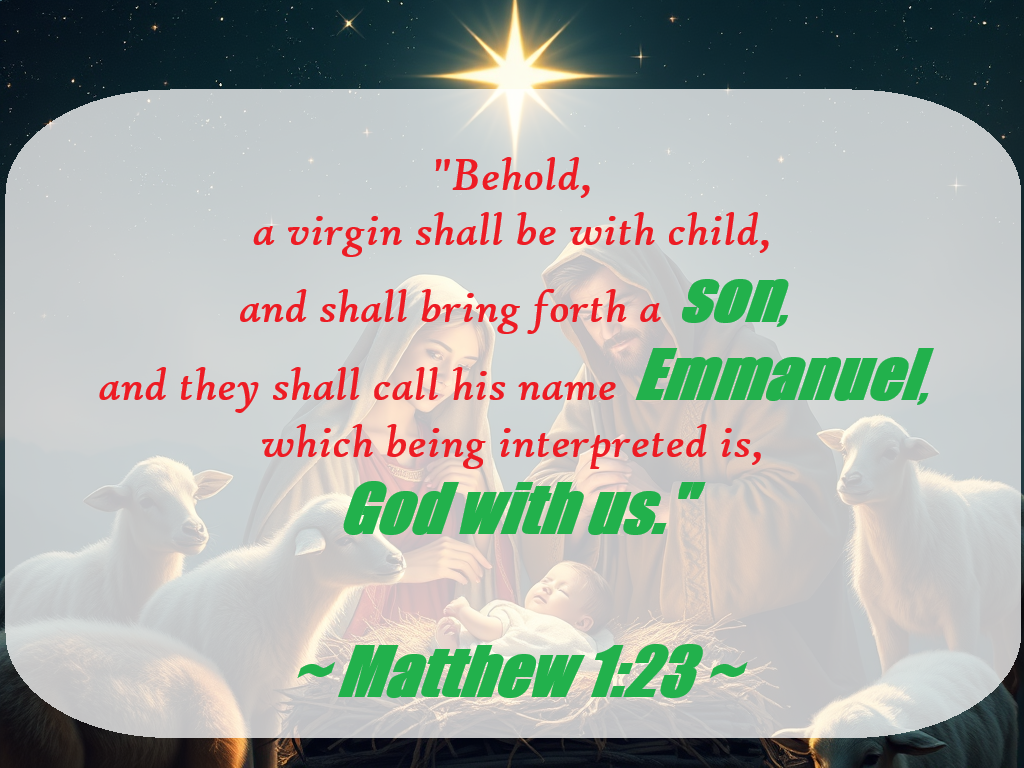
“Behold, a virgin shall be with child, and shall bring forth a son, and they shall call his name Emmanuel, which being interpreted is, God with us.” (Matthew 1:23)
This verse, quoting Isaiah 7:14, is a cornerstone of Christian belief, proclaiming that Jesus is Emmanuel—”God with us.” Through His birth, God entered into the human condition, bridging the gap between a holy Creator and sinful mankind.
The choice of Bethlehem as the place of Jesus’ birth was no accident. This small, seemingly insignificant town fulfilled the prophecy of Micah 5:2:
“But thou, Bethlehem Ephratah, though thou be little among the thousands of Judah, yet out of thee shall he come forth unto me that is to be ruler in Israel; whose goings forth have been from of old, from everlasting.”
This prophecy not only pinpointed Bethlehem as the Messiah’s birthplace but also underscored His eternal nature and divine authority. The humility of Jesus’ arrival in a manger—an event surrounded by shepherds, not kings—reflects the unexpected ways in which God works to accomplish His purposes. Jesus, the King of kings, entered the world not with earthly pomp but in lowliness, symbolizing His mission to seek and save the lost (Luke 19:10).
The Nativity account is rich with theological themes that resonate throughout Scripture. It emphasizes humility, as seen in Mary and Joseph’s obedience to God’s will and in the modest circumstances of Jesus’ birth. It highlights divine sovereignty and purpose, demonstrating that every detail of the Messiah’s coming was part of God’s eternal plan. Finally, it points to the fulfillment of God’s promises—not only to Israel but to all nations. The angel’s proclamation to the shepherds in Luke 2:10-11 declared this global significance:
“Fear not: for, behold, I bring you good tidings of great joy, which shall be to all people. For unto you is born this day in the city of David a Saviour, which is Christ the Lord.”
Christmas, therefore, is not just a celebration of a historical event but a remembrance of God’s faithfulness and His unfathomable love for humanity. It is a time to meditate on the miracle of Christ’s coming, His fulfillment of centuries-old prophecies, and the hope He brings to all who trust in Him. Through the Nativity story, we are reminded of the ultimate purpose of Christ’s birth: to reconcile sinners to God and to usher in His eternal kingdom.
The Early History of Christmas
The early church did not initially celebrate Christ’s birth as a distinct holiday. Instead, the focus of early Christian worship was on the central events of Christ’s death, resurrection, and ascension, which formed the foundation of the Gospel message. The commemoration of the Lord’s Supper (1 Corinthians 11:26) and the annual celebration of Easter took precedence as believers reflected on the atoning work of Christ and His victory over sin and death. The birth of Jesus, while deeply significant, was not observed as a formal feast during the first few centuries of the church.
By the 4th century, however, December 25th had become widely recognized as the date to celebrate Jesus’ birth. Historical evidence suggests this choice was influenced by a desire to offer a distinctly Christian alternative to pagan winter festivals such as Saturnalia, a Roman feast marked by revelry and the worship of false gods. By placing the celebration of Christ’s birth at this time, the church sought to redeem the season for the glory of God, proclaiming the birth of the Savior as the true reason for rejoicing.
While the exact date of Jesus’ birth is not recorded in Scripture and remains unknown, the selection of December 25th was not intended to distort biblical truth. Rather, it was chosen to emphasize Christ’s triumph over darkness, both spiritual and literal. This symbolism aligns with John 8:12, where Jesus declared:
“I am the light of the world: he that followeth me shall not walk in darkness, but shall have the light of life.”
The observance of Christmas served as an evangelistic tool, redirecting attention away from idolatrous practices to the Gospel message. By celebrating the Incarnation during a time traditionally filled with secular and pagan festivities, the church boldly proclaimed the good news that the true Light of the World had come to deliver humanity from sin.
Moreover, the date carried profound theological symbolism. Falling near the winter solstice, December 25th marked the time when days began to lengthen, signifying the triumph of light over darkness. This metaphor resonated deeply with Christian teachings about Jesus as the light who shines in the darkness and whom the darkness cannot overcome (John 1:5).
The establishment of Christmas as a distinct holiday also reflected the church’s desire to emphasize the fullness of Christ’s redemptive work. While His death and resurrection are the culmination of His mission, the celebration of His birth highlights the miraculous beginning of God’s plan of salvation. The Incarnation itself is a cause for worship, as it reveals God’s immense love in sending His only begotten Son to take on human flesh for our redemption (John 3:16).
In choosing December 25th, the church not only reclaimed a season marred by paganism but also invited believers to reflect on the humble yet glorious arrival of their Savior. The observance of Christmas became a time of worship, joy, and Gospel proclamation, a tradition that continues to this day. For Christians, this date remains a powerful reminder that the birth of Jesus Christ is the turning point in human history, the moment when God’s light pierced the darkness and offered hope to a fallen world.
The Significance of Christmas
For Christians, Christmas transcends mere cultural traditions or seasonal festivities. It is far more than an occasion for exchanging gifts or enjoying family gatherings—though these can be meaningful expressions of love and joy. At its core, Christmas is a solemn yet joyous celebration of the Incarnation, the miraculous moment when God entered human history by taking on flesh. This pivotal event is not only central to the Christmas season but to the entire Christian faith, as it reveals the boundless love and mercy of God toward fallen humanity.
The significance of Christmas lies in the profound truth expressed in John 1:14:
“And the Word was made flesh, and dwelt among us, (and we beheld his glory, the glory as of the only begotten of the Father,) full of grace and truth.”
Here, the Apostle John encapsulates the miracle of the Incarnation: Jesus Christ, the eternal Word of God, became fully human while remaining fully divine. He did not come in power or grandeur, but in humility, born as a baby in a manger. This act of divine condescension demonstrates the infinite grace of God, who, though sovereign over all creation, chose to dwell among His people to accomplish their redemption.
The Incarnation underscores the purpose of Christ’s coming: to save humanity from sin and to reconcile sinners to a holy God. From the moment of His birth, Jesus’ mission was clear. He came not merely to teach or to set an example—though He did these things perfectly—but to lay down His life as a ransom for many (Mark 10:45). His birth in Bethlehem was the beginning of a life that would culminate in the cross, where He bore the weight of humanity’s sin and the full wrath of God in our place.
The birth of Christ is inseparable from His life, death, and resurrection. Together, these events form the foundation of the Gospel. Again, the angels’ proclamation to the shepherds in Luke 2:10-11 reveals this connection:
“Fear not: for, behold, I bring you good tidings of great joy, which shall be to all people. For unto you is born this day in the city of David a Saviour, which is Christ the Lord.”
In these words, the angel announced the arrival of the Savior, emphasizing that Jesus’ birth was the fulfillment of God’s redemptive plan. Through His sinless life, Jesus fulfilled the Law on our behalf (Matthew 5:17). Through His sacrificial death, He atoned for our sins (1 Peter 2:24). Through His victorious resurrection, He defeated death and secured eternal life for all who believe in Him (1 Corinthians 15:20-22).
Christmas is a time to reflect on this incredible gift of salvation. It calls believers to marvel at the humility and love of the Savior, who left the glory of heaven to walk among us, suffer for us, and redeem us. The celebration of Christmas is not merely an acknowledgment of Jesus’ birth but an act of worship directed toward the One who is “full of grace and truth.”
For Christians, the joy of Christmas is rooted in the hope and assurance that Jesus Christ, God in the flesh, has come to save His people. It is a reminder of the lengths to which God has gone to rescue us and of the eternal glory that awaits those who are reconciled to Him through Christ. As we sing carols and gather with loved ones, let us remember that the heart of Christmas is the Gospel: the good news that Emmanuel, “God with us,” has come to make us His own.
Modern Challenges and a Call to Faithfulness
In today’s increasingly secularized culture, Christmas faces significant challenges that threaten to obscure its true meaning. On one hand, commercialization has transformed the season into a consumer-driven spectacle, emphasizing materialism, elaborate decorations, and the pursuit of “holiday cheer” rather than the celebration of Christ’s birth. On the other hand, cultural marginalization has led to a deliberate effort to strip Christmas of its religious significance. Movements to remove nativity scenes, ban Christian symbols from public spaces, and replace “Merry Christmas” with generic greetings like “Happy Holidays” reflect a growing societal reluctance to acknowledge the Christian foundation of this sacred day.
The result is a version of Christmas that often prioritizes superficial joy and fleeting traditions over its profound spiritual meaning. While generosity, family togetherness, and acts of goodwill are commendable, they are insufficient without the recognition of Jesus Christ, the true reason for the season. The Incarnation—the moment when God became flesh to dwell among us—cannot be reduced to a mere backdrop for holiday festivities.
For Christians, these cultural challenges present not just an obstacle but an opportunity. In a world that increasingly drifts from its Creator, believers are called to stand firm in their faith and reclaim the spiritual essence of Christmas. This begins with a personal commitment to Christ-centered worship. The season of Advent, for example, offers an opportunity to meditate on the hope, peace, joy, and love that Christ brings, culminating in the celebration of His birth. Worship services, Scripture readings, and prayerful reflection can help refocus hearts on the miracle of the Incarnation.
Family traditions also play a vital role in honoring the biblical principles of Christmas. Rather than centering activities around consumerism, families can emphasize the story of Christ’s birth by reading the Nativity accounts in Matthew and Luke, singing hymns like “O Holy Night” and “Silent Night,” and engaging in acts of service to reflect Christ’s love to others. Simple practices, such as displaying a nativity scene, can serve as tangible reminders of the Savior’s coming.
Additionally, Christmas provides a unique opportunity for Christians to share the Gospel with a world hungry for meaning. Even in a secularized context, the season’s themes of joy, hope, and giving resonate deeply with many. Believers can use these themes as bridges to explain the true source of lasting joy and hope found in Jesus Christ. Whether through conversations with neighbors, outreach events at church, or personal acts of kindness, Christians can shine the light of Christ in the midst of a culture preoccupied with temporary distractions.
Ultimately, the challenges posed by a secularized Christmas call believers to deeper faithfulness. The Apostle Paul’s words in Romans 12:2 serve as a fitting reminder:
“And be not conformed to this world: but be ye transformed by the renewing of your mind, that ye may prove what is that good, and acceptable, and perfect, will of God.”
Rather than conforming to cultural trends that dilute the message of Christmas, Christians are invited to renew their minds and hearts in Christ, transforming the way they celebrate and testify to His love. By returning to the foundational truth of the Incarnation, believers can ensure that the true light of Christmas—the light of Christ—shines brightly in a world darkened by materialism and spiritual apathy.
This season, let us rise to the challenge. May we proclaim with joy and conviction that Christmas is not merely a holiday but a holy day, a celebration of the greatest gift ever given: Jesus Christ, our Savior and Lord.
Conclusion
Christmas is far more than a festive season; it is a celebration of God’s redemptive plan and His immeasurable love for humanity. At its heart lies the wonder of the Incarnation—God becoming flesh to dwell among us and to bring salvation to a lost and dying world. It is a time to reflect on the humility of Christ’s birth in a lowly manger, the fulfillment of centuries-old prophecies, and the hope of eternal life offered to all who believe in Him.
As we gather with loved ones, exchange gifts, and sing carols, let us keep our hearts fixed on the true reason for the season: Jesus Christ. May we honor Him not only during Christmas but in every aspect of our lives, living in gratitude for His grace and in obedience to His Word. And if you do not yet know Christ as your Lord and Savior, I pray that you will today. The greatest gift you can receive this Christmas is the gift of salvation, freely given through faith in Jesus Christ. He came to save sinners, to bring light into darkness, and to offer you the peace and joy that only He can provide.
This Christmas, may the wonder of Christ’s birth fill your heart with hope, and may His love transform your life now and forever. “Thanks be unto God for his unspeakable gift” (2 Corinthians 9:15).