
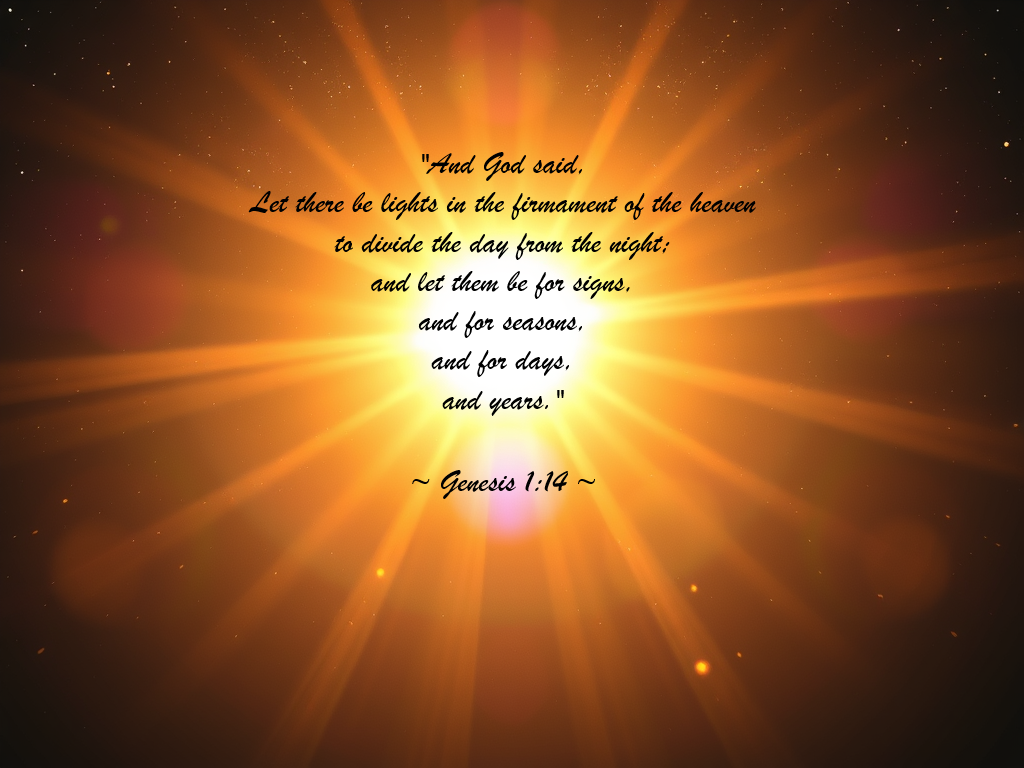
Genesis 1:14 presents a fascinating detail that calls us to reflect deeply on the nature of God’s creative process: “And God said, Let there be lights in the firmament of the heaven to divide the day from the night; and let them be for signs, and for seasons, and for days, and years.” This command follows verse 3, where God declared, “Let there be light.” At first glance, these verses appear almost identical, with the only notable difference being the singular “light” in verse 3 and the plural “lights” in verse 14. However, upon examining the original Hebrew text, a more profound distinction emerges.
The Hebrew Language: A Key to Understanding
In verse 3, the Hebrew word used for light is “or” (אוֹר), which refers to a general light—something that illuminates. On the other hand, in verse 14, the word for “lights” is “me’orot” (מְאוֹרוֹת), meaning luminaries or light-bearers. These luminaries are specific creations meant to carry or bear light. Thus, God created the first light independently of any physical object, while the luminaries of day four (sun, moon, and stars) serve as instruments to bear light.
This difference is significant. It demonstrates that light, in its purest form, is a creation distinct from its vessels, such as the sun or stars. God is not dependent on these physical objects to produce light. He can create light by His word alone. This concept challenges the materialistic assumptions we often carry about the world—that light must always come from a natural source like the sun. In truth, God, as the ultimate source of all things, can manifest light without physical intermediaries.
The Source of Light: A Divine Mystery
A natural question arises: If God created light on day one, what was its source? How could light exist before the creation of the sun, moon, and stars? From a human perspective, this may seem perplexing, as we tend to associate light with physical sources like the sun. However, as scientific observations have revealed, light exists in many forms that are independent of the sun and stars—whether through phosphorescence, electricity, or atomic reactions (Boardman). In this way, God’s initial creation of light may well have been of a type beyond our full comprehension, reminding us that His ways are higher than ours (Isaiah 55:9).
Yet, the Genesis account is clear: God chose to create light before creating the specific vessels—the sun, moon, and stars—that would later bear this light and regulate time. This divine order points to something greater than physical creation—it reflects God’s intentionality and purpose in everything He does.
God’s Timing and Purpose: A Rejection of Idolatry
Why didn’t God create the luminaries on day one, instead of waiting until day four? This is a question worth considering, and Bible scholars have offered various insights. H.L. Willmington, for instance, suggests that God’s order of creation reflects the central role of Earth and humanity in His plan (Willmington’s Guide to the Bible, 1984, p. 3). Mankind, the pinnacle of creation, resides on Earth, and Christ’s redemption occurs here. Therefore, Earth and its light were given precedence over the heavenly bodies.
However, a more compelling explanation centers on God’s rejection of idolatry. In the ancient Near East, virtually all civilizations worshipped the sun, moon, and stars as deities (Hamilton, 1989, p. 11). The Egyptians had Ra, the god of the sun; the Canaanites revered the moon god, and the stars were often seen as controlling human destiny (Wenham, 1987, p. 21). Moses, under the inspiration of the Holy Spirit, wrote Genesis as a corrective to these pagan beliefs. By creating light on day one and waiting until day four to create the sun, moon, and stars, God makes it clear that these heavenly bodies are not divine. They are mere creations—tools in His hand that serve to give light, mark seasons, and divide day from night.
Notice how the text of Genesis 1:14 doesn’t even mention the sun and moon by name. Instead, they are called “the greater light” and “the lesser light.” This deliberate omission underscores their subordinate role. They are not gods to be worshipped but creations to serve humanity and glorify God. This truth would have been radical for Israel and their neighbors, as it boldly denies the worship of nature and points instead to the Creator of nature.
A Theological Reflection on Light
Theologically, light is a recurring symbol throughout Scripture. In the New Testament, Jesus declares, “I am the light of the world” (John 8:12). This statement reveals that physical light, like that created on day one, is not the ultimate source of illumination. True light comes from God Himself, and in the person of Jesus Christ we see the fulfillment of that light. Christ is the one who gives light to all men, and through His sacrifice, He leads us out of spiritual darkness.
In Revelation 21:23, we are told that in the New Jerusalem, “The city had no need of the sun, neither of the moon, to shine in it: for the glory of God did lighten it, and the Lamb is the light thereof.” Here, the Bible brings us full circle—from the initial creation of light to the eternal light of God’s presence, which will one day replace even the sun and moon.
The creation account in Genesis 1 is not only a record of the physical world coming into being; it is a declaration of God’s sovereignty, His order, and His rejection of idolatry. The distinction between light and light-bearers teaches us that God alone is the source of all things, and He does not need the sun or stars to bring light into the world. His light was present before these luminaries were created, and it will endure long after they are gone.
As believers, we are called to worship the Creator, not the creation. The Genesis account serves as a powerful reminder that the world around us is not divine. It is a reflection of God’s glory, created for His purposes and for our benefit. The light we enjoy, whether from the sun or other sources, ultimately points us to the true Light—Jesus Christ, the Light of the world.