
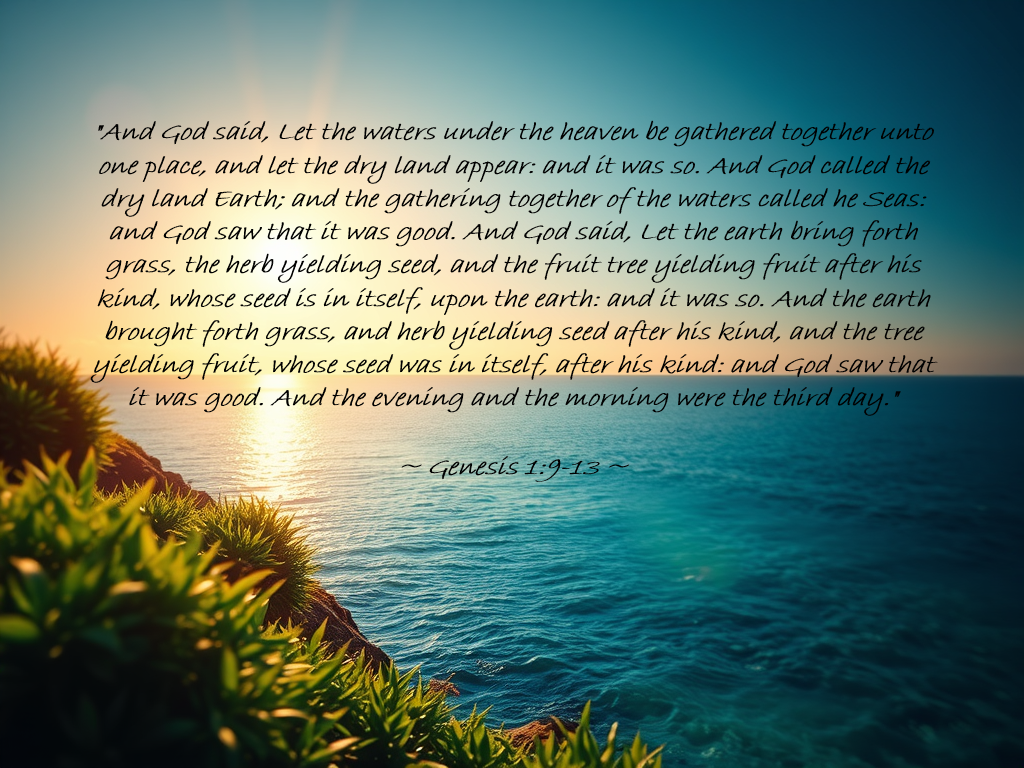
In the creation account of Genesis, we find a masterful and intentional structure that reflects God’s sovereignty, wisdom, and care in ordering the universe. One of the most striking features of this narrative is the parallelism between the third and sixth days of creation, which John H. Walton highlights in The NIV Application Commentary: Genesis (2001, p. 113). He notes that each of these days contains two distinct elements: on day 3, God separates the land from the water and brings forth vegetation; on day 6, God creates the animals and human beings. This intentional pairing of days not only demonstrates the literary and theological artistry of the biblical text but also emphasizes the functional relationship between the acts of creation.
The Parallel Structure of Days 3 and 6
When we examine the days of creation, we see that the first three days focus on forming and structuring the world, while the latter three days focus on filling it with life. Day 3 is particularly significant as it marks the moment when God brings forth dry land, separating it from the waters, and then commands the earth to produce vegetation. This act of creation provides the foundation for what is to follow on day 6. On day 6, God fills the earth with living creatures, both animals and, ultimately, human beings made in His image. Walton’s observation that both days contain two elements underscores the idea that God’s creation is purposeful and well-ordered.
This parallelism reveals God’s careful planning and provision for His creation. Day 3 establishes the environment necessary for life, while day 6 populates that environment with the creatures and humans who will inhabit it. God does not merely create life without first preparing a place for it to thrive. This points to the wisdom and forethought of God, who is deeply invested in the well-being of His creation.
The Functional Relationship Between Days 3 and 6
Beyond the structural parallelism, Walton also notes the functional relationship between the two days. The dry land and vegetation created on day 3 provide the essential habitat and sustenance for the living creatures and humans that appear on day 6. This relationship reflects God’s providential care. The earth is not a barren place; rather, it is filled with life-sustaining resources, such as plants for food and land for habitation. The animals and humans that God creates are not independent of the rest of creation—they are intricately connected to the world God has made.
This functional connection also speaks to the nature of humanity’s role in creation. In Genesis 1:28, God commands humans to “be fruitful and increase in number; fill the earth and subdue it. Rule over the fish in the sea and the birds in the sky and over every living creature that moves on the ground.” This command implies stewardship, a responsibility to care for the created order. The fact that God provides everything needed for life on day 3 before creating animals and humans on day 6 highlights that humanity is meant to live in harmony with the rest of creation, using the earth’s resources wisely and responsibly.
Theological Implications for a Christian Worldview
For Christians, this parallelism and functional relationship in Genesis affirm the belief in a purposeful and intentional Creator. God’s creation is not haphazard or random, but carefully designed to fulfill His will. Each day of creation builds upon the previous one, culminating in the creation of humanity, the crown of God’s creation, made in His own image.
Moreover, the order of creation underscores the principle of divine providence. God provides for the needs of His creatures even before they are created. The dry land and vegetation of day 3 serve as a testament to God’s provision, ensuring that His creation will flourish. This reinforces the biblical truth that God is not distant or indifferent but is actively involved in His creation, ensuring its order and well-being.
This view also upholds a high regard for the sanctity of creation. Since God carefully designed the world to support life, we are called to respect the natural world. The dominion given to humanity in Genesis is not a license for exploitation, but a call to stewardship, reflecting God’s care and provision for all He has made.
This insight deepens our understanding of God’s wisdom and sovereignty. It calls us to recognize the intentionality behind the created order and to embrace our role as stewards of God’s world. As we reflect on the structure and purpose of creation, we are reminded that God’s design is perfect, and His provision is abundant—a truth that should inspire worship, gratitude, and faithful stewardship of the world He has entrusted to us.