
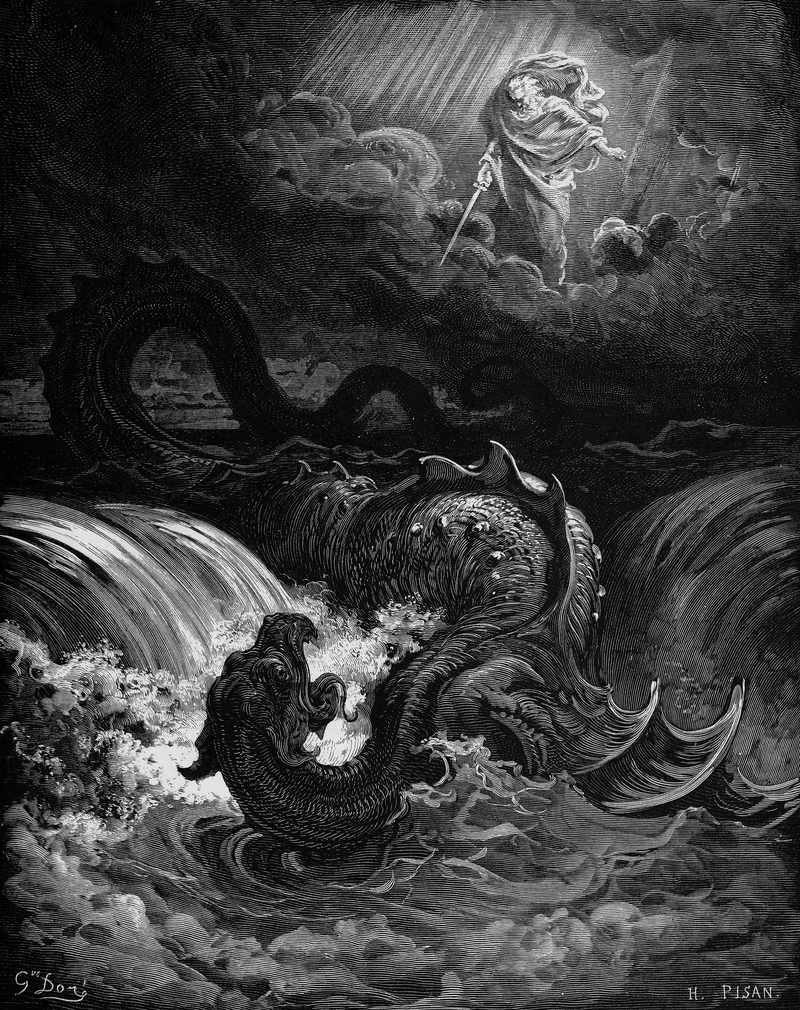
Critics of the Bible often assert that the creation account in Genesis borrows from other ancient cosmogonies, particularly those from Babylonian or Akkadian sources. They point to perceived similarities between the biblical narrative and other ancient texts, such as the Enuma Elish, to argue that Genesis is simply an adaptation of older myths. However, a deeper examination reveals key differences that underscore the uniqueness and divine authority of the Genesis account. Far from being a derivative work, Genesis offers a fundamentally different understanding of God, creation, and the cosmos.
The Role of Darkness in Genesis and Ancient Cosmogonies
A common feature of ancient cosmogonies, as Kenneth A. Mathews observes, is the presence of darkness before light. However, in the biblical account, darkness is not portrayed as a primordial force threatening God’s sovereignty. Instead, Genesis 1:2 states, “The earth was without form and void, and darkness was over the face of the deep.” This darkness is simply a part of God’s creation, over which He has total control. As Mathews points out, God demonstrates His authority over the darkness by naming it (Genesis 1:5), indicating that it is a created entity, fully subject to His will (The New American Commentary: Genesis 1-11:26, 1996, pp. 132-133).
In contrast, many ancient cosmogonies depict darkness or chaos as malevolent forces that the gods must overcome. For example, the Babylonian Enuma Elish portrays the goddess Tiamat as a chaos monster who is violently subdued by Marduk. Such narratives feature gods who struggle against pre-existing forces, suggesting that these gods are limited in power and authority. The biblical God, however, faces no such opposition. In Genesis, there is no rival deity, no cosmic battle—God speaks, and creation obeys. This stark contrast underscores the omnipotence of the biblical God, who stands alone as Creator.
Tehôm and Tiamat: Linguistic and Theological Distinctions
Another point of comparison often raised by critics involves the Hebrew word Tehôm (the deep) and the Akkadian word Tiamat. Some scholars suggest that the biblical Tehôm is derived from the Akkadian Tiamat, the goddess of chaos in the Enuma Elish, whose body is used by Marduk to create the heavens and the earth. Victor P. Hamilton and other scholars have noted this proposed connection, but linguistic and theological evidence points to a significant difference between the two terms.
As John J. Davis notes, Tiamat lacks the guttural “h” found in Tehôm, suggesting that the Hebrew term was not borrowed from the Akkadian (Paradise to Prison: Studies in Genesis, 1975, p. 46). Furthermore, Kenneth Mathews argues that both terms likely derive from a common Semitic word for “deep” or “ocean,” rather than one being borrowed from the other (The New American Commentary: Genesis 1-11:26, 1996, p. 133). In fact, it is more plausible that Tehôm represents the original concept of the deep, which the Babylonians later personified into the chaos deity Tiamat.
The theological differences are even more pronounced. In the Enuma Elish, Tiamat is a personified force of chaos, a powerful rival to Marduk. The creation process in this narrative involves violence and conflict, with Marduk fashioning the cosmos from Tiamat’s defeated body. Genesis, however, presents Tehôm as impersonal, mere physical water, not a deity or force in opposition to God. There is no struggle or conflict in Genesis; God’s power is absolute. He creates effortlessly, commanding the waters to separate, and they obey without resistance. This theological distinction is critical: in Genesis, creation is an orderly process executed by an omnipotent God, while in the Enuma Elish, creation is the result of a violent victory over chaos.
The Uniqueness of the Biblical Creation Account
The Genesis creation account stands apart from other ancient cosmogonies in more ways than just its treatment of chaos. Many ancient accounts feature gods with limited power who must create from pre-existing materials, often in the midst of conflict. By contrast, the God of the Bible creates ex nihilo—out of nothing. Genesis 1 portrays a sovereign God who calls the heavens and the earth into existence simply by speaking. There is no need for pre-existing matter, nor is there any force or being that could threaten His authority.
Moreover, ancient cosmogonies frequently depict gods with questionable motives—jealousy, fear, and even violence. The Enuma Elish, for instance, portrays Marduk as a god who must prove his supremacy through combat. The biblical God, however, is portrayed as supremely good and wise. His creation is described as “very good” (Genesis 1:31), and His purpose is to bring order and life, not to assert dominance through violence.
Explaining the Similarities: Preservation or Distortion?
Critics often argue that the similarities between Genesis and other ancient cosmogonies suggest that the biblical author borrowed from these earlier sources. However, it is more likely that the reverse is true. The biblical account represents the original, divinely revealed understanding of creation, which became distorted over time as various cultures drifted away from the truth of God.
Genesis presents a continuous history of God’s interaction with humanity, beginning with Adam and continuing through Noah and his descendants. This suggests that the original knowledge of God and creation would have been preserved within the early generations of humanity. As groups of people dispersed after the flood (Genesis 10-11), their understanding of creation and God would have become corrupted, leading to the various myths and cosmogonies we see in other cultures.
A useful analogy is the “telephone game,” in which a message passed from person to person gradually becomes distorted. Similarly, as the true account of creation was passed down through generations and across cultures, elements of the original narrative remained, but many details were altered or misunderstood. Thus, the similarities between Genesis and other ancient cosmogonies are not evidence of borrowing but rather of a shared memory of creation that was preserved in the Bible and distorted elsewhere.
Conclusion
The Genesis creation account, far from being a borrowed or derivative myth, is a unique and authoritative revelation from God. Its portrayal of an omnipotent Creator who effortlessly brings the cosmos into existence stands in stark contrast to the limited, conflict-ridden gods of other ancient cosmogonies. While similarities exist between Genesis and other ancient narratives, they are better explained by a shared origin of knowledge, which became distorted over time. The Bible, through divine revelation, restores the original and accurate account of how God created the heavens and the earth.
The Bible Is a Distortion of the Truth. The Truth Is Finally Being Revealed As Part of the Grand Disclosure Project….
You Still Need To Dig Deep; Know Where To Look; and Use Divine Intuitive Discernment (DID)….To Sort The Lies….Half-Truths…and Distortions….For the Truth.
Thank you for your comment, but I must disagree. The Bible is the inspired and infallible Word of God (2 Timothy 3:16), revealed to humanity through divine inspiration. It is the ultimate source of truth. The idea that some “grand disclosure project” is now revealing a new, higher truth contradicts the biblical teaching that God has already provided all necessary truth through His Word and through Jesus Christ, who is “the way, the truth, and the life” (John 14:6).
Scripture warns against false teachings and “new” revelations that deviate from the gospel (Galatians 1:8), reminding us to be cautious of those who claim to have hidden or secret knowledge (Colossians 2:8). The Bible also emphasizes the need for spiritual discernment, but this discernment is rooted in the Holy Spirit’s guidance in understanding the Word of God, not in seeking new truths outside of it.
Using “Divine Intuitive Discernment (DID)”, as you suggested, must be grounded in a biblical foundation. True discernment comes through the Spirit of God (1 Corinthians 2:14) and by testing all claims against the clear teachings of Scripture (1 John 4:1). The notion that there are layers of lies, half-truths, and distortions that need to be sorted out undermines the trust in the sufficiency of God’s Word, which is “quick, and powerful, and sharper than any twoedged sword” (Hebrews 4:12).
The Bible is not a distortion but the revealed truth of God. We are called to hold fast to the Word of God, trusting in its reliability and sufficiency, rather than looking for alternative sources of truth that claim to supersede or correct it.
Please 🙏 Start Reading The Attached Website….”The Ascension Glossary”….You Will Learn The TRUTH…. https://ascensionglossary.com/index.php/Main_Page